Episode Transcript
[00:00:09] Speaker A: You're listening to Selling the Dream. This isn't an interview and we're not
[00:00:13] Speaker B: journalists, but each week we'll ask our guests to open up and share their
[00:00:16] Speaker A: secrets to business success.
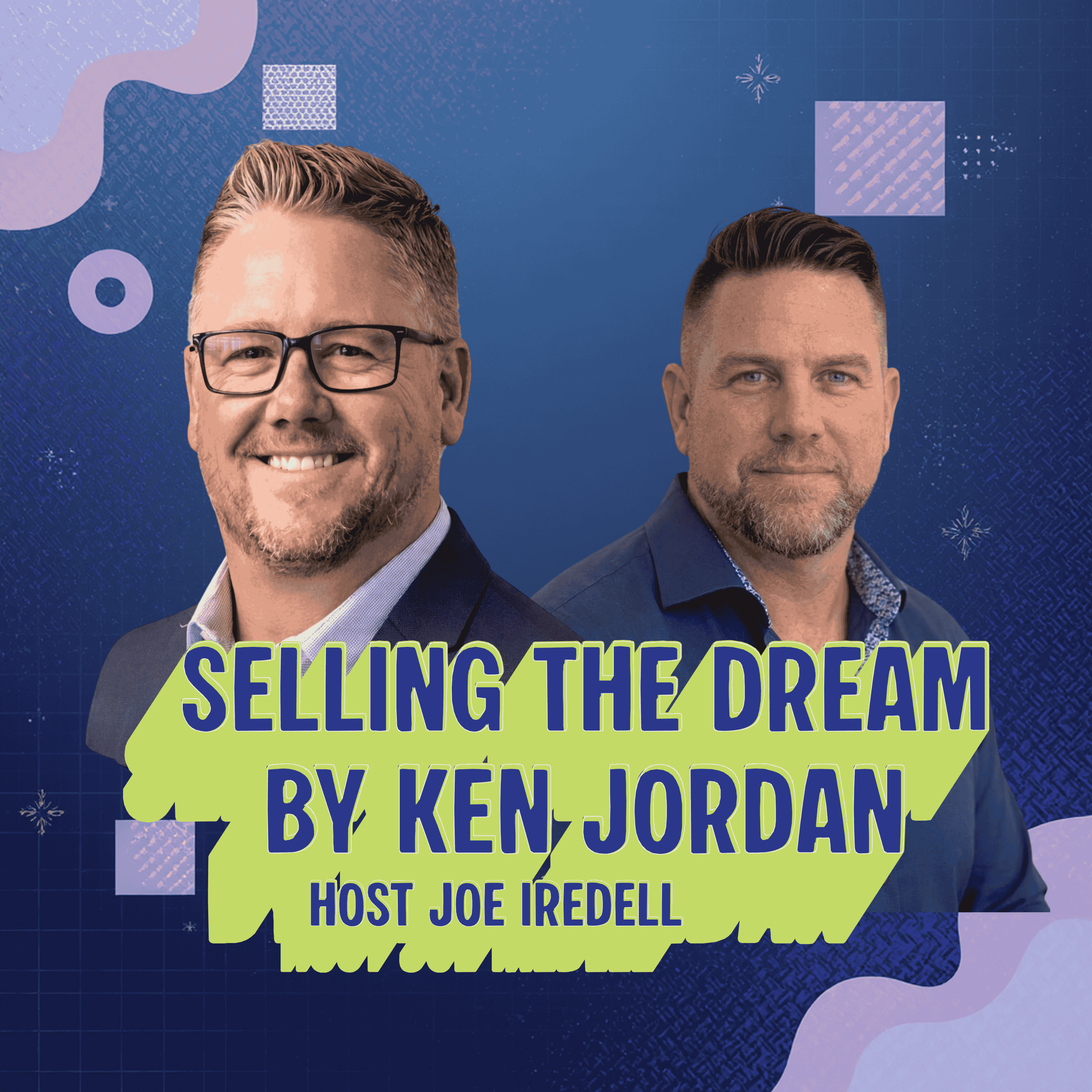
[00:00:18] Speaker B: Let's have a conversation and have some fun. Hey, everybody. Welcome to Selling the Dream. I am Ken Jordan with Princeton Mortgage, and as always, I am joined by my co host, Joe Iredell with sure Sites Media, among other interests and and professions.
This is a podcast for salespeople, entrepreneurs, leaders, and today we are joined by all three in one.
But before we get to our guest, I want to just chop it up a bit with Joe. Joe Iredell.
What's new with you, man?
[00:00:57] Speaker C: Same old, same old, man. Just, just trying to keep forging ahead, brother. We got a lot of. A lot of good stuff going on. I got. I'm in the process of opening a rather large jiu jitsu academy. So that whole process has been pretty interesting. Going through the whole construction phase and TI's and learning a whole new just world that I was. No.
Not very familiar with until the past year. So that's been exciting and that'll be really cool. We'll be one of the premier training facilities out here on the west Coast.
[00:01:34] Speaker B: Enough of a, you know, plug there. What do you think?
[00:01:38] Speaker C: You got to come out and train, bro.
[00:01:40] Speaker B: Yeah, I told you, man. Rolling around on the floor, whole jujitsu thing just looks weird, dude. I'm just gonna be honest with you. It looks weird.
[00:01:49] Speaker C: It's like learning how to swim, dude. You never know when you're gonna need it, but you will.
[00:01:56] Speaker B: Anyway, I want to introduce our. Our guest today. I've known Joe McNally for a long time. Gosh, I want to say, going on 20 years and yeah, I've kind of had a, you know, a second row seat to. To all of his accomplishments via one of my dearest friends, his mom, Maria, who is a real estate agent and one of my very first referral partners in the mortgage industry.
And I got to see Joe grow.
And when we ran into each other recently and caught up, I knew that it would be awesome to have him on. So I want to introduce Joe McNulty from your elevator Solutions. Joe, how are you, brother?
[00:02:41] Speaker A: Good. How are you? Glad to be here. It's not. Breaks up my normal day of dealing with elevator issues. So I'm glad to. Glad to chat and hang out with you guys for a bit.
[00:02:51] Speaker B: Joe's dying, dude.
Just do it, man.
[00:02:55] Speaker C: I'm not going to say it, but I'll ask. I'll Pose it this way. How many times people ask you if there's a lot of ups and downs in your business?
[00:03:05] Speaker A: It is.
If I don't hear it once a week, then I'm probably not interacting with enough people that week. Or maybe I'm even on vacation. However, we were on vacation a couple weeks ago in. In the Outer Banks, and the house we were staying at had an elevator. So at least two or three relatives, our in laws of mine asked me that question in some form or fashion. So it's. Unfortunately, it's something we have to deal with all the time.
[00:03:29] Speaker C: See, I said that to kj. He thought, he acted like. Like, that's the first time I ever heard the Joe. Like, I came up with, like, comedy gold on the spot. Oh, I'm like, this guy's probably heard this, like, multiple times a day. I'm not. There's no chance I'm saying that
[00:03:46] Speaker B: we
[00:03:46] Speaker A: gotta get you mortgaging more. We gotta get you mortgaging some more commercial real estate. So that way you can hear that joke a little more.
[00:03:53] Speaker B: Yeah, yeah, yeah.
One of my favorite lines was our buddy Scott Bailey was in a septic business and he. What did he always say, Joe?
He's your number one man in the number two business.
[00:04:03] Speaker C: That's right.
[00:04:05] Speaker A: I love it.
[00:04:06] Speaker B: And I'm sure that is probably pervasive in his industry. Right? Everybody's got something.
Well, Joe, thanks for joining us today, man. I was hoping we could kind of just kick it off with a little bit of background on. On your professionally. On. On where you've been and, and your. Your rise.
What's that?
[00:04:27] Speaker C: Let's start with two truths.
[00:04:29] Speaker B: Oh, thank you. Thanks. See, I do it every time, Joe Mack. I. I always forget. So before we get too far into it, let's get into two truths and a lie. I want to ask you for three facts. Two of them are true, one of them's false, and by the end, Joe Iredell is going to try and figure out which one is the lie. So you ready to go?
[00:04:48] Speaker A: I'm ready. I've been waiting for this.
[00:04:50] Speaker B: All right, I'm gonna write these down. So go ahead. What's. What's fact number one?
[00:04:55] Speaker A: So fact number one is I used to be a firefighter for about eight or nine years.
So that was interesting. And then the second one is my wife and I actually met through racing cars.
So there's, you know, there's that. And then the third one is actually got two hole in ones on one single 18. So playing. Playing 18 out of course.
And was able to get two hole in ones on two. Two different par threes.
[00:05:25] Speaker B: Interesting. I think I know the answer to this, so I'm gonna let. When we get there, I'm gonna let Joe absolutely run with it. But fair enough. I can't wait to talk about that. Anyway, so. So give us a little bit of backstory. What. Where have you been?
And, and, and kind of your. Your road to being an entrepreneur and opening up a very successful elevator services company.
[00:05:50] Speaker A: Yeah. So I started in elevators right out of high school actually.
So I was, I was working at a small company. I graduated from high school, I didn't go to college. And I was working at a small company that did some concrete repair type work on high rise buildings, mid rise buildings, and had the opportunity to. To join the elevator side and had a long discussion with my dad about it because I really liked the people I was working with. Didn't like what I was doing. But like the crew that we were working with, they were still very good friends and one of them has followed me at two or three different companies and joined the elevator trade. But we. So I went to be an apprentice, started working in Washington D.C. actually started on the Supreme Courthouse doing new installs on some elevators and some elevator renovation projects and then bounced around inside of D.C. that mostly government buildings, a lot of museums and stuff that you see, which was awesome. The last building I worked on in DC was the old patent office building in the Supreme Courthouse or pretty Men's Green courthouse. And then I sort of moved back home to. I was just staying there out of town during the week and then would drive back and forth on the weekends and ended up getting a job up closer in the, in the Philadelphia area and stayed in the Philadelphia area until about 2017. But in that journey I got to really be involved in a lot of like boards and programs outside of the actual company. The company I was at actually gave me kind of freeway to just go join. So I joined, sat on a board for NASA, which is the elevator inspectors certification organization.
So I joined that actually still sit on the board for that as well. Actually this year I'm the secretary or on the treasurer, which is cool. On the executive committee for that. So they have about. I think there's 3,000 inspectors in the US and they're in charge of making sure that they have the right certification. And then. So anyway, so got got to join in that while I was on the. So this was while I was on the service side of the industry.
Got to join National Association Elevator contractors on the safety committee as well as on the, one of the builders associations. I got to actually campaign on the Hill for a couple years making sure that certifications for elevator service guys and inspectors was part of like bids inside of government contracts and stuff. So I actually recently ran into a colleague down the shore who I hadn't seen in about 10 years. And he was showing my wife pictures of us in the Capitol building talking with congressmen and stuff. And she's like, I didn't even know you did that. And I'm like, I forgot that I did that, to be honest with you. But it was really cool because I got to picture build those relationships. So in 20, the end of 2017, beginning of 2018, I transitioned over the professional services side in elevators. And basically we do consulting and design work and kind of oversee businesses or big portfolios or elevators on the professional services side, meaning we do inspections for state compliance inspections as well as doing, being like the advocate for the client. So making sure that they're getting what they're paying for in all different ways. So if they're putting a new elevator in or modernizing an old elevator, like renewing it, making sure that we put a specification together, design it and say this is what the elevator needs to be, put it out the bid. And then throughout the process make sure that the drawings, submittals, packages, all that stuff are in place. And then throughout the, after that's agreed upon, then we make sure that that's what's put in. And we come in different stages depending on what it is. And then late in like 2018, early 2019, got to help develop a program basically Asset Management Elevators, which is reviewing every elevator proposal, invoice, every basically problem that's coming through on the elevator. We were reviewing these problems for the elevator owners on bigger portfolios, like owners that maybe own like 100 hotels or things along those lines.
And we were able to save them like it was basically a 1200% return on investment with what they were paying us versus what we were getting them in savings for missed build items or proposals that were, things were included in their contract.
I actually usually have a hard time telling a client that I'll save them that much money because it's, it's, it's, it's a number that people just don't believe until they say it. And I have a one long term client who's been my client since the beginning of that program. And he, he's like, don't even say don't, don't even Say it's my boss. Like, I'm like, what do you want me to say? Like, he's like, just give them the numbers and let them figure out the math. Because 1200% ROI is just, you know, crazy. So anyway, so we moved into that. So I was running a company, it was called Liberty Elevator Experts and had a great time there. Had so many awesome colleagues.
[00:10:42] Speaker B: You said you were running a company, you were CEO.
[00:10:45] Speaker A: I was the general manager. Yeah. So I don't know if title was really a thing. We, we thought we were a small business operating on a national scale. And I was the coo, I think, was my actual title.
But we kind of went through some transitions on different sides of the house. And so, you know, we saw a finance team for a little bit, oversaw, you know, the sales team and all that stuff, so that everything kind of flowed through the. It was a hands on owner operator who had a great relationship with and still do. And so we were, we were doing just everything right. I mean, at one point in time we needed to move an office. So we, you know, framed the office and drywalled it and painted it, you know, ourselves. So it was essentially doing everything there.
And it was really fun. We went through a merger in 2022, maybe 23. 2023, and merged with two other companies. One was a Canadian based company doing the same services and one was a company based out of St. Louis and basically went from having like 65 employees to 350 employees. So it was a really neat merger. Three way merger. It's a great time to go through a merger. We did M and A before that on, on the other side, but.
And then after that. So I transitioned to overseeing just the consulting division. So we do inspections and inspection side of the house and then consulting side of the house.
So I was the COO for consulting there. They were bought by a private Equity Group in 2025 or 2024, somewhere around there. And I transitioned over into the chief sales officer. And I'll tell you, I'm the worst salesperson you'll ever meet.
I'm more of a, I'll show you how we can do this and how it works and then you buy it from me after type of person. But so sale. I don't know if CSO was the right term for what I was doing, but it fit for a little bit. And then just made the decision to, you know, go out on my own. I had some things going on with services that kind of fell between what a service contractor does and what a general Contractor does during repairs or during modernizations or new construction projects. Meaning like things that need to get tied in to each other. Things people need to understand how the two sides of the house work. Like, meaning the fire alarm systems or the electrical systems. And basically being that mediator between the two outside of like what a consultant does and being a little more hands on and had some guys that wanted to do some work so started the business and it was, so it was mostly work that was not what I was doing or it was work that I was not doing at, at the company that I was with. And then just, you know, made the change. And then people just started calling after I, you know, when I wanted to figure out what I was doing. Got to help a couple like government companies that did a lot of government contracts get a lot of work done and help them big contracts and advise them on how to be involved in things. And then most of those relationships are all from the boards that I sit on and things along those lines and, and then a couple, you know, and then now I'm just doing whatever kind of comes my way, which is consulting design. And we do, like I said, we, we help people out, get getting projects done where somebody, you know, falls between the cracks or, or it doesn't necessarily fall in the, in the mix of an elevator contractor or a general contractor and just helping them get those things done.
[00:14:01] Speaker B: How many people, how many people do you, how many people do you lead right now? I mean, it did. Do you still have like, you know, teams? Or is it, is it really just you or how, what's, how's your company structured?
[00:14:14] Speaker A: Yeah, so right now it's just me with, with an employee. Just started, actually. Just started.
And then I use a bunch of subcontractors, 1099 type of guys and they do all sorts of, you know, the, the great thing about the network that it kind of created throughout the past maybe 15, 20 years is like there's a lot of guys that don't want to work for a company or they own their own company and they're trying to grow it. So, you know, just been helping them out. It's funny because there's not a ton of, you know, consulting, like, what's the word I'm looking for? Like, you won't see consultants like ever like fighting with each other or this kind of inside of the trade. Like everybody's just like, oh yeah, I used to work with him, he's great. Or, and like I'm just, I'll just sub stuff out to a small Consulting company. That's the consulting work that needs to get done in a certain area or, or, you know, do it. Do it myself or whatever that might be.
So it was really cool to just, you know, make that transition and have all those people that have been, you know, we, we've worked together over the years and they're trying to grow their thing. I'm trying to grow my thing.
And the, the cool part about, like, it all is really like all these favors that I did for people over the years have like, kind of come back around.
People recommended me to clients and things along those lines. Like, most of my clients are all national portfolios that are, you know, huge 100 plus building portfolios and all over the place. And they're based. Nobody's based anywhere, singular. It's all. I barely have any clients in Philadelphia in a comparison. Like, I have clients in Philadelphia, but because everything's all over the country and it's just. That's just the way it's based. So it's pretty neat.
[00:15:53] Speaker C: So how small of a. Like, it seems like it's such a niche industry.
Right. Like, is it?
[00:15:59] Speaker A: It is.
[00:16:01] Speaker C: And it's, I'm assuming, very highly regulated and niche. So you're.
[00:16:08] Speaker A: Yeah. So on the inspection side, it's like very regulated. Right. And I don't do a ton of inspection work, but it's pretty. It was pretty neat. You know, that, that side is. Is cool because I know a lot of people that are. Sit at the state level where they're the chief elevator of. Chief of the elevator division and stuff, so that all those items are. But on the consulting side, it's like not. It's not really regulated.
It's more of a. You're the one making sure that the elevator company in the building are following the regulations.
So you're really just like this professional
[00:16:39] Speaker B: person, Joe, who's your customer.
[00:16:42] Speaker A: Yeah.
So big retail chains, basically the people that typically the people that own the property or that are looking to install
[00:16:52] Speaker B: the elevator, you kind of represent them with the manufacturers and the installation.
[00:16:57] Speaker A: Yes. And then if they. They already have a portfolio that we, you know, manage that as well, which is pretty neat.
So it's all, you know, it's. I mean, anybody can be it, you know, all the way down. You know, we help out like small churches and stuff as they kind of go through the process to make sure that they're going to get something complete. All the way up to, you know, the biggest retail names that, that you could think of, like food chain food stores, the boxes that usually come to your house every day, probably that your wife orders. I won't mention the name, but, you know, I know my wife.
I was like, we're just paying ourselves here. That's back and forth here. But, you know, those types of people that have buildings all over the place, and they're just trying to centralize and figure out how to manage it. It's a really disrupted industry because of, like, acquisitions and things on the contractor side. So somebody just needs to be there to, like, make sure elevator owners or managers have the. The visibility into their portfolio to kind of make sure things are going. Yeah.
[00:17:59] Speaker C: The companies that make the elevators, there's not. I can't imagine that there's too many of, like, people don't go out is
[00:18:06] Speaker B: the only one I know.
[00:18:07] Speaker A: There you go. Yeah.
[00:18:07] Speaker C: Like, the barrier of entry seems like it's, like, daunting to start an elevator company.
[00:18:15] Speaker A: It is. There's not a lot.
I mean, I can tell you that.
I'll say that in. In the States, a majority of them sits, like, you can fit them all into a.
Into a conference room, into, like a conference center, in a convention floor.
So, you know, there's. There's the. There's like five or six major manufacturers that produce and operate all over the. All over the country or all over the world. And then there's probably a dozen more inside the U.S. but most of them make, like, one component. So you would buy one component, like the electronics from somebody, you would buy the steel from somebody else. You'd buy the hydraulic system or the. Or the electric system from somebody else, depending on, like, what type of elevator.
[00:18:58] Speaker B: Like, who do you lease your music from? Like, is that, like, you know, the elevator? Like, is that a vendor or.
[00:19:04] Speaker C: That's music.
[00:19:05] Speaker A: Bad joke. That was a terrible joke.
Yeah, you should start that business.
[00:19:10] Speaker B: That's right. I leave. I leave elevator music to elevator manufacturers.
[00:19:17] Speaker C: There you go.
[00:19:17] Speaker A: That's awesome question.
[00:19:18] Speaker B: So did you ever.
So I had this. This old story that I was told once, and you being in the industry, tell me if this. If this legend holds true, is that, you know, a lot of people were very reluctant to trust elevators back when they were, you know, kind of buildings were getting to five floors, six floors, ten floors, and at a World's Fair, Otis cut the elevator cable to test and show how the braking system worked while standing in and. Or on an elevator platform. Is any of that true?
[00:19:54] Speaker A: It's actually true, and it's a funny story. So one of the programs you can choose to go into, which is One I did, which is Certified Elevator Technician program through nac, is one of the first questions in the first book was, you know, the history and that that was it. Then it was true or false. Did Otis invent the elevator?
So if I asked you that question, most. Most people would say yes, because of the World's Fair story. He actually invented the governor, which is what you're. You're talking about now. I mean, it had a specific name at the time, but what it. What it does is essentially it's a centrifugal force either on like a. Basically as. As the. It spins faster, the weights go out faster, and it eventually hits a lock and. And hold. Pulls up on a break on the elevator. So it's a mechanical core. There's all sorts of other brakes that will grab the ropes and things along those lines. But somebody needed to have something on the actual elevator itself to make sure that it would stop. And that's what he was demonstrating, that you can cut the cables and it could stop. So when people say, you know, the elevator dropped or plummeted to the bottom, and a lot of things would need to go wrong. I'm not saying it can't happen or it hasn't happened, but it's typically mostly somebody maliciously or unknowledged doing, you know, the. The actual act. The elevator itself, if everything's maintained correctly, could never, you know, or would never hear about it.
[00:21:18] Speaker B: I mean, it's one of those, like, you see it in movies, right? But, like, when does it. When does it act? I mean, people get stuck in elevators all the time. Right. But not the. Not the plummet, you know?
[00:21:28] Speaker A: Yeah. And usually it's getting stuck because, you know, two reasons. It's either not maintained or one of the safeties is just being sensitive, you know. So a lot of times, you know, one of the things they say when you get stuck in an elevator is just stay there until somebody comes to get you out. Don't. Don't try and get out or break something to get out, because you're gonna put yourself in more danger.
Obviously there's, you know, circumstances that might change your opinion if you're in there, but, you know, that's typically, you know, what happens. So it is a. It is different. You know, it's a different experience from knowing the things versus, like, seeing movies. And you're like, that's not right. My wife's like, let me.
[00:22:03] Speaker B: Do you get along with escalator guys?
[00:22:05] Speaker A: Or is that, like, that's actually part of the trade? Right? It's the same trade, same guys.
Escalator guys are definitely confident in, in their abilities because they are rare.
A good escalator guy is, you know, it's hard because, you know, I think
[00:22:21] Speaker B: it's like a Ron Burgundy situation, I guess.
[00:22:25] Speaker A: It's not the way it is.
Yeah, no, it's not. It's actually, I shouldn't say that. It probably in New York City and some of you guys are probably going to see this video hopefully, and, and they comment, but, you know, some of them have. Have an attitude that I usually call out on the table right away. So. It's funny, especially in classes, we like to pick on the escalator guys, but escalators are for some reason included. You know, they, you know, kind of the same trade. Vertical transportation, moving walks are included, though. But they, you know, they wait.
[00:22:55] Speaker B: Skywalks are also included.
[00:22:58] Speaker A: Yeah, yep. They're all the same.
[00:22:59] Speaker B: Gotta be the bottom of the rung. Like, nobody has any respect for those guys, right?
[00:23:05] Speaker A: The opposite. You know, nobody has respect for the guys that work on the two or three, three stop elevators that are just. They call them hydraulic elevators. And you know, most of the, the high rise guys and, and the guys that do, like, World Trade center and things along those lines, and the escalator guys get the most respect, but, man, they have the biggest chip on their shoulder, I can tell you that. And I, and I. And I hope they see this because it's fun making fun of them in class and stuff like.
[00:23:31] Speaker B: So let me ask you, I know that your. Your path seems pretty linear. I mean, the way you describe it, like, almost seems super logical. I did this. I made this connection. I learned this, I built this network, I took this board position. But, like, it couldn't have been that straight. Like, at some point in your path, like, where did it zig when you thought it was gonna zag? From being, you know, entering the industry to actually owning your own company and a consulting firm?
[00:23:59] Speaker A: Yeah, I think so. I think the start of it was I was, I worked for. After I left dc, I worked for a company in Philadelphia and then made a choice to go work at a. At another company, and that company actually went under. And at that point in time, like. Yeah. And I just. I think so. I was probably 23 at the time. 20 were. And I just.
[00:24:21] Speaker B: Were you at that point, were you mature enough to understand the magnitude of what was going on? Are you kind of still in your, like. Yeah, whatever. I'll just move on to the next thing.
[00:24:28] Speaker A: Well, I own my own house. At that time. Thank you for getting me in my mortgage. So I was 22. I think I was 22 when I bought that house. 21. 22, yeah. And so when we bought the house, like, I remember coming home and. And just being like. And the guy who I. Who owned the business, I was the last employee that, like, he, you know, could pay for. And he dropped me off the house. I walked inside. I'm like, I have no idea what I'm gonna do. It was not a great time in the economy, you know, things were not good.
Went and drove far away. Take a couple interviews and stuff, because nobody was hiring locally that I knew, that I knew at the time.
And then I. Somebody had reached out that I had actually met before. And he found out that that company closed, and he got my information from somebody else. And that's when the light clicked. So I went, had an interview. It was a fantastic interview. There. They were local to Westchester, and I loved working there. Was one of those places where people were great, the owners were great. It was, you know, it was a great time. And when I was there, like, I realized that, like, relationships are how you make sure that you're always staying working. And, you know, you know, my mom, who's a huge relationship person, and she tries to find out every person that she knows that, you know, and no matter who she meets.
And so kind of being in that big name dropper. Oh, yeah, she's a huge name dropper.
[00:25:47] Speaker B: You know, that person.
She knows everybody, though. So it's.
[00:25:52] Speaker A: I know she does know everybody. And. And it, you know, kind of relates to this is like, you know, when I was sitting there, I realized that if I need, you know, this company may not be here forever. The company that I'm now at, like, what. What do I need to do to make sure that, you know, this company goes out of business or if I, you know, if I don't like what I'm doing. So started just building relationships with other people. And the company that I was at, that I ended up going to. I stayed there for about 10 years, or maybe it was like less than 10 years, but somewhere around that time, and I moved to another company with a person that I had worked at at that company. So that person had started his business, and a couple years later, you know, we still stayed in contact and worked together on some projects and things, and that's how I ended up with that position. And then it kind of just really escalated from there and, you know, kind of moved it onto the sales side of things. Which is.
[00:26:43] Speaker B: I see what you did there.
[00:26:45] Speaker A: See, so that's how, you know, most of my relationships are. I don't.
Outside of one sales event, I've. I've never been a person to go sit at a convention floor on the, you know, sales side and, you know, wave you into my booth and hook.
[00:27:02] Speaker B: Yo, you did a ton of conventions, didn't you, bro?
[00:27:05] Speaker C: I was walking ponies, like, two years straight. I was in trade show shape.
[00:27:10] Speaker A: What. What were you. What kind of business was it?
[00:27:14] Speaker C: It was for, like, digital advertising. But so we did, we did every, like, American Dental Association, a lot of, like, medical spas. We did, we did some home shows for like, contractors and stuff like that. But it was okay. It was, you know, you're. You stand in the booth all day and then you go out, you party all night, and then you're back in the booth and.
[00:27:36] Speaker A: Yeah.
[00:27:36] Speaker C: Crushing.
[00:27:37] Speaker B: Yeah. Who do you think? Which convention you think is more fun? American Dental association or the elevator Convention?
[00:27:45] Speaker A: Bro, I'm gonna say the elevator convention because they're a bunch of dejects.
[00:27:49] Speaker C: Well, I'm gonna tell you the number one craziest, craziest convention that you can ever go to. I don't even know if it's around anymore. The limousine. Limousine, yeah.
[00:28:00] Speaker A: Bro, that has to be wild.
[00:28:02] Speaker C: Yeah.
I don't know if the statute of limitations has run out from like, like there was one, I was at one in Atlantic City and they had one in Las Vegas. And it was debauchery. Like these dudes.
It's a different industry, Dennis. Get pretty wild. Plastic surgeons, they're like, lame.
[00:28:24] Speaker B: Can see that, but I can.
Dude. I was in Nashville a couple weeks ago, and I'm traveling with my CEO, Rich White.
And, and we, we, we go out, we take one of our teammates, our loan officer, one of our top producing loan officers out to dinner, just pick his brain doing some content creation things like that. And then afterwards we're like, hey, let's go grab a drink. So we, we go across the street to one of the bars in Nashville. And we're just standing there, you know, music's playing. It's really, it's a good, it's a good time. Now picture this. There's me and then there's Rich. Rich is like six, two, friggin like Adonis model.
[00:29:02] Speaker C: Like, you know, like Schwarzenegger and DeVito.
[00:29:06] Speaker B: Yeah, Danny DeVito. Right, exactly, exactly. So, so I'm standing there and this woman keeps walking by. She walked by three times, and all three times she like kind of does One of these, you know, looking. And I'm like, what's this lady want? You know what I mean? Like, you know, we're just trying to have a drink and listen to some music. So she finally walks up to me and she goes, were you our speaker today?
And I'm like, yes, yes, I was.
She's like, I knew it. She grabs me by the hand. Meanwhile, Rich didn't hear any of that. All he saw was like, this woman grab me by the hand and take me over to the other side of the bar. So he's like, I do it wrong. So anyway, she goes, she's pointing at me. She's like, I told you it was him. I told you was him. And there's this group of people like, oh, man, that's crazy. And I'm like, I, I, Dude, I, if I had all night, my first question was going to be, what did you like best about my speech? But instead I just, I just said, what industry are you? And she goes, ice cream. And I'm like, yeah, no, that, that wasn't me.
You look just like him. I'm like, sorry, I'm in the mortgage business. And we all laughed. And then I went back. But, man, I feel like I could have had a lot of fun with that one, but I leaned into it.
But the ice cream convention, what the hell?
What do you think that keynote speech was about at an ice cream convention?
[00:30:30] Speaker A: I've been to some terrible conventions with some terrible keynote speakers, but I don't think I. If you're giving me ice cream, I don't care what you're speaking about. I think,
[00:30:42] Speaker B: yes, that's a good point.
[00:30:43] Speaker A: Yeah.
[00:30:44] Speaker B: So, so your, your, your company shuts down, you're trying to insulate now. That's a big, it sounds like that's a, that was a big part of your, your decision making going forward. But you, you use the word relationships a couple times. Like, you know, for, for someone in, in, in, in industry, whether it's elevators or not. But, like, what kind of advice do you have for people that, that really want to build a powerful network? Because it seems like it's your network that put you where you are today in the, in your, in your, in your business. Right.
[00:31:12] Speaker A: Yeah. And, you know, one of the things, you know, people in, on the service side of things, right? Service, Any, any type H vac, you know, any type of service. Elevators, doesn't matter. You know, selling. You need to sell something and you need to believe in it. And, but you need to execute.
And I think that's where a lot of people, you know, go wrong. They either believe in it, but they can't execute on it or they execute on it, but they're not really, they're just kind of in the motions and not, not really believing in what you do. So, you know, understanding what the client's needs are and selling it to that client like, you know, the, the problem I always find with conventions is you're just trying to grab people that are walking by up to convention floor so you don't know if they need your product or not. And I was just in a room yesterday with a, a group that has, I don't know, 100 plus buildings all across the US and one of the things was, you know, we have like, we'll just say five services. And I was like, you guys are too organized. You don't need these other three services, you just need these two, these two things. And you know, after the meeting, I leave late last night, around 9 o' clock at night, he connects me via email and text message saying hey, you need to meet this person. He's got another 200 buildings across the US I want you to, I want you to meet him. Like, hey, he, Joe is super honest. He literally told us like we were going to buy all the services and he literally told us not to, you know, just told buy these two and it makes more sense. And that's where you know, the relationship kind of extended with before a 24 hour period was over. And it's because I believed in what I was doing and I believe that selling somebody something they don't need is not right. And I know we can execute on those two things for them, but the other three we wouldn't be able to execute on because they don't actually need them.
[00:32:55] Speaker B: So came together, you're willing to disrupt the thought pattern, you know what I mean? Like, like most salespeople, they, they, they, they don't ever want to deviate from, you know, the path of here to the path of the sale. And, and there's a great book called the Challenger Sale that, that a big part of what he talks about is you know, really if you want to be valuable, challenge their, challenge their preconceptions early because that's where your opportunities are going to lie. And, and you build trust. And I remember Joe Iron, I remember talking to you one time, that was a big part of, you know, what you were doing in your, in your digital marketing was like you were not walking in saying you should buy this. You're walking in saying you should stop doing this, this, and this.
And it was a big part of how you developed your trust and your relationship.
[00:33:45] Speaker C: But I think one of the things that Joe touched on that really is key for a lot of people that want to be successful outside of just, you know, a lot of times you'll. Someone will get a job, you'll be working for the company, and your idea is, oh, I want to do everything for this company and my job duties within the company, and that only will serve you to the eyes of, you know, that company itself. But when you get outside and you start treating it like I'm in the industry, and I want to. I'm trying to learn everything about the industry, and it's counterintuitive to what you're taught. When you work for a big corporation that has competitors, like, don't talk to them because they're our competitor and they're bad. But meanwhile, if you look at it like, I'm an individual, I'm in this industry, the competitors of my company have other individuals that may not work at this company later. And, you know, so when you start to branch out and you start to think, like, what's. What solutions does our industry offer these clients that maybe my specific company doesn't have, but somebody else may have, then your knowledge base gets greater, and you can. You can better recommend solutions to the clients because you know where the limitations of what you have to offer are and where the other ones are picked up. So that makes you, as an individual, more valuable in your industry as opposed to just a salesperson selling whatever Kool Aid your company kicked down the line to you.
[00:35:08] Speaker B: Yeah, and it's. It's.
[00:35:10] Speaker A: I agree.
[00:35:10] Speaker B: It's a big part of, you know, Joe, you said you're not a good salesperson, and I think that's ironic that you said that because, you know, the reality is, you know, most salespeople don't recognize what the new age sale looks like. And what we're describing here is the new age sale. It's not the 1960s, you know, product price negotiation, set sign. It's not Yellow Pages. Right.
[00:35:36] Speaker C: It's more reverse psychology.
So you don't need this, but you really need this.
[00:35:44] Speaker B: All right.
They in the same industry, Joe? Or we talk. Is that different?
So monorails.
[00:35:51] Speaker A: Monorails. So they are.
I do know people that are in the elevator industry that currently work on monorails, but typically they're not in the same, like, union or. They're definitely not governed by the same code. Codes. So even though moving Walks, you know, blew your mind that they're, you know, still inside the elevator,
[00:36:16] Speaker C: Right. If it's over like what, like 120 degrees, then we're talking about or, or nine, like anything what, less than 90, then we're in the same industry, right?
[00:36:27] Speaker A: We're talking moving walks. Like the ones in the airport.
[00:36:31] Speaker B: Moving walks, dude.
[00:36:34] Speaker A: So the main elevator code governs. The elevator code governs elevators, moving walks, escalators, residential lift, and then incline lifts. Like if you.
[00:36:47] Speaker B: Gondolas.
[00:36:48] Speaker A: Yeah, like gondolas or the glyphs that will go. Like if you have a house up on a cliff and you go down to the beat. Needs to go down to the beat. Like those little lifts like that, the stair chair lifts inside your house, things along those lines.
[00:37:02] Speaker C: Okay, so when you're in the industry,
[00:37:03] Speaker B: like, who, who's the stud? Like the guy that works on that. I mean, we're setting up the pecking order here. I want to know who the apex is on that, on that Delta Force elevator world.
[00:37:14] Speaker A: Yeah, so I'm gonna say, and I'm gonna get some criticism here, but from. I'm sure when we see, see this online, but.
So probably the high rise guys in, in New York City, Chicago, Louisiana.
Those main, main cities, and sorry, Boston and Philly, you guys just don't have big enough stuff. But those are the, those are the main ones that in, you know, in my opinion are probably those guys that work on those real high speed elevators.
Had a couple in my class a couple weeks ago in New Jersey and love talking to them guys because they just have, I mean that is just real deal, big stuff. A lot of you got to have computer knowledge, you got to have, you know, mechanical knowledge, you have to have electrical knowledge. Because the littlest of interference on, you know, on some shielded cable that goes down on the elevator or, or between two little things can cause a pretty big disruption. And they're, they're fast elevators, right? They're running, you know, a thousand, two thousand feet per minute, which is pretty fast.
[00:38:13] Speaker B: Help me out with that. How fast? Like in comparison to a car, how fast is, you know, a high rise elevator, New York City elevator. How fast is it moving?
[00:38:23] Speaker C: It's like 25 sub.
[00:38:24] Speaker A: 20 miles an hour. Yeah, like, yeah, it's around like 20. On the big, big stuff, it's about 20, give or take four to five feet.
[00:38:32] Speaker B: Still pretty fast.
[00:38:34] Speaker A: It's fast. Yeah. I mean, you figure when you ride a bike, you can pretty much ride a bike at like 10 to 12 miles an hour. So that's Double the speed of a bike.
Unless you got an E bike. I have an E bike, which I love. I think it's about 20.
[00:38:48] Speaker C: Imagine flying on your bike and coming to a dead stop.
[00:38:51] Speaker A: That's what we're.
[00:38:52] Speaker B: Yeah.
[00:38:52] Speaker A: Yes.
Yeah. And that's what, that's the other thing is those guys keep them safe. Like not only on the emergency stop, they have it adjusted out so that, I mean, it's going to hurt, but it's not going to hurt as bad as like a complete stop. So if they make an emergency stop, there's a whole, there's a distance that it needs to stop greater than, but not. It needs to stop less than, but not greater than. So, you know, they have to figure that stuff out. Those guys are the real deal. And, and I give them a hard time, but because I tell them the escalator guys are better, but you know, they, they. So we'll just keep pitting them against each other.
[00:39:26] Speaker B: I like it about ski lifts.
[00:39:29] Speaker C: Is that, is that a totally different industry?
[00:39:32] Speaker A: So it's governed by a different code. But in the state of Pennsylvania, ironically enough, the same inspectors do the ski lifts that do the elevators on the state side, the state employees do that. So shout out to them because that's a crude industry. And I'm sure they're probably not that well maintained, at least the ones that I've seen.
But they're the same in most states that, the same governance in those different states, which is, which is different.
So amusement park rides too in some states are governed by the same, same people. Like in North Carolina, I believe they're governed by the same people.
I think in Pennsylvania as well. So you know those, the carnies that go out there and, and do their thing and something like that.
[00:40:15] Speaker C: Just like a fast elevator, right?
[00:40:18] Speaker A: It really is. I mean it honestly is, it's. It's. You know, they use air and just shoot that thing up there. Which is, which is pretty funny because if you look at them, you know me geeking out on elevators when I was on the Ocean City boardwalk last, last summer, um, I had my so or my, I guess what are they, my in laws, nieces and nephews or something with me. And I'm like, oh, that's an elevator part. Like they use that switch on that. They're like shut up jokes. I'm like, it doesn't really matter.
[00:40:46] Speaker B: Proof that we can be Patrick about anything, right?
[00:40:49] Speaker A: Yeah, yeah, that does, it really does. I mean there's so many things that people are inside of an industry that people are like, super passionate about. So I sit on the board for the Elevator and Escalator Safety foundation, which promotes.
Basically, it promotes awareness to kids riding elevators and escalators, mostly escalator things. There's a lot of, like, LAX just actually took on a bunch of the information, and they're going to start passing it out, but a lot of kids get hurt. They get their toes cut off or whatever from wearing Crocs, playing on an escalator, playing on a moving walk, things along those lines. And this organization, Elevator and Escalator Safety foundation, really promotes that. So it's all these industry people that help, you know, reach out to their clients and give their clients the information. And there's a whole program behind it. There's an app, there's YouTube videos and stuff like that. It's a foundation. But for the past two years, I got to be the chair of it, and my time is up. You get two years and then you're off. But for the past two years, I've been the chair, and it's been super fun. I got to be involved in hiring the new executive director of it, and we went from one employee all the way up to three in, like, less than two years, I think. So it's been awesome because we just been, you know, growing that and. But that's, like, where people geek out on certain things inside the industry. Like, somebody geeks out on that. People geek out on just, you know, things like, you know, what type of electronics should be used in elevators, and they'll campaign to all sorts of levels in code meetings and things along those lines. But people are passionate about elevators. But people are really passionate about their little pet projects inside of elevators, too.
[00:42:20] Speaker B: Like a real estate agent driving around town like, I sold that house. K.J.
[00:42:23] Speaker A: do you remember? That's exactly right.
[00:42:25] Speaker C: Do you remember when we. I forget if it was either.
[00:42:28] Speaker B: Granted, yeah. As soon as he said that, I looked at you and you started laughing. I'm like, guy, tell the story.
[00:42:33] Speaker C: We were late for a flight, and we were in Pittsburgh, and they have
[00:42:37] Speaker B: the late for a flight because of him. For the record, they have moving walkways,
[00:42:41] Speaker C: like, next to each other. So he's running in front of me.
I don't know why I thought this was funny, but I grabbed his bag and I just chucked it onto the moving walkway going the opposite way.
[00:42:52] Speaker B: So he had to run all the way back.
[00:42:55] Speaker C: All the way back.
[00:42:56] Speaker A: I like that move. That's a good move.
[00:42:58] Speaker B: But I cannot.
[00:43:01] Speaker C: I've never seen a guy so abreast when he got to the game.
[00:43:05] Speaker B: I've never. But I can't get on a skywalk without thinking about that. Like, cracks me up, you know, I've
[00:43:12] Speaker A: never seen that move. I've been around a lot. I travel almost every week, and I've never seen anyone do that to their buddy. But I can tell you I'm gonna
[00:43:19] Speaker B: do that to a stranger in front of you.
[00:43:23] Speaker A: Especially, like, Charlotte or something. With the long escalators that go, like, forever or what feel like forever.
[00:43:29] Speaker B: Yeah.
I was in Atlanta this weekend, and there was an escalator. I swear to God, it was like, you know, remember Tom and Jerry? When he died, he was taking the escalator to heaven. It was just, like, miles long.
Like, holy. This is a. It's a very long escalator, man. It just.
[00:43:47] Speaker A: Yeah, there's some big ones there in the new American Airlines lounge, or not new, but they redid it in the a.
In.
So it has, like, the flagship lounge and the regular lounge. The escalators there are, like, really long, like, almost uncomfortable to, like, stand at the top of and look down and say, I gotta go. Death map thing next time you're there. Look at that. It's like they're uncomfortable to look at.
[00:44:09] Speaker B: This is in Philly.
[00:44:11] Speaker A: Yeah, in Philly. To go to the American Airlines lounge and in the. In terminal A.
[00:44:16] Speaker B: Okay, before we get back to two, Trish and I, one other question before I want you to kind of talk and share.
I want you to, you know, go from being an employee to starting your own company.
How much uncertainty, how much fear existed in that transition or for you, Was it, like, so natural having. Having the connections, having everybody lined up? Was it. Was it the guarantee business from one particular customer that was like, look, if I could. If I only have this business, I can survive. Like, what was that transition like? And what were some of the hard decisions you had to work through?
[00:44:53] Speaker A: So kind of back to the thing I said before. I was kind of blessed with a bunch of relationships and some favors getting returned, and I was. One of the reasons why I was able to make the transition is I. I got to essentially work for a business. You know, there was. I was not their employee. I was a subcontractor, but worked for one business. They were. Did a bunch of government work, and they were. They were really like an elevator contractor, but they did other building services, and they were just like. They. They wanted my time and attention, so they were like, well, you just tell us what it needs to make, and we'll tell you how much Work we can give you to, you know, for you to make that in the first, you know, year or so.
So I was really blessed with kind of an opportunity to like not have to take a big dip, you know, in pay or a lot of uncertainty. But I will tell you, like, day one was fun. Day two, like the phone wasn't ringing as much as I was used to and the uncertainty level kind of came up, you know, because you always have like the, the corporate side calling you and then you have your employees calling you and you have your customers calling you when you're at a company. And when I, you know, I no longer had the employees and the, and the actual, like, company calling me to do things. And so it was really like my phone normally non stop rings, emails, just going all the time. And, and day, day one, it was like, oh boy. And you know, by day five, after a few people had found out, it was like, okay, well now, you know, now it's, it's gonna get going and I think we're on month 11 here. Yeah, we're on month 11. And I'm pretty sure Lori's gonna kill me with how much work, you know, we've been taking on. So I told her, this is gonna be great. You know, I only got to work for this one company and do some other things around on the side. And yeah, it took off and, and it's been awesome, you know, in the past, but it was, it was, it was scary even knowing that I had that one client because I'm like, well, the client was actually up for sale. So I was like, well, what happens if they don't. They said they had about a year, six months to a year. I'm like, well, what happens if they sell in six days, right? I mean, you know, as soon as you go on the market.
But they, you know, they helped me out for, help me out for a while and I helped them out, obviously, and it was really cool experience. Got to learn a lot about mergers and acquisitions, more than I knew. Elevator side is very crude and old school and stuff that a lot of, you know, small business owners on that side, this was big corporate stuff selling to, to another big corporate agency. So it was really cool to understand and see how, how professional and how much diligence was done on that side. So I got to learn something that I, I would have never had an education on other than, you know, the small. We used to do small acquisitions at our company, but this was the real deal. I mean, this was. They spent $4 million just on diligence, on the, on the owner side and the, or the, on the, on the seller side, on the buyer side, they spent like $10 million in diligence. So it was, it was crazy. Yeah, it was great. I mean, it was, it was an awesome experience. I would never get to probably see that again in my life, but it was, it was really cool. And I got to learn a lot of things that I never would have learned there, but again, it was a relationship thing that they wanted me and only me, and that was fine. And now here we are and hopefully whatever next venture they start after their, their sales complete now, so after their next.
So it'll start another venture and, and include me on that one too.
[00:48:13] Speaker B: That's awesome, man. Well, congrats on a. On what looks like, like, I. It's been, it's been 20 some years. Feels like it was a lot quicker than that, you know, because time is fast, but just. I. I know, I know it's. I know it's been, it's been a cool run for you. So.
All right, let's get back to our two. Truce and a lot.
I think I wrote them down. So, Joe, are you ready? Do you remember what they are? Do you want me to run through them? I'll run through them. I'll run through them.
[00:48:40] Speaker A: Okay.
[00:48:40] Speaker B: I remember number one, you were a firefighter.
I think you said eight or nine years. I wrote down eight to nine.
You met your wife Lori, racing cars. And number three, you had two holes in one, two aces in one 18 hole round.
Joe, which one of those is the lie?
[00:49:05] Speaker C: So feel like if you had two holes in one in one round, that that would like make the news. Unless it was like mini golfer or executive, like something, you know, putt putt, like one of those deals. So, like, that actually could be true.
His whole history didn't mention one thing about fires or, or any of that. So I'm gonna have to go with I don't believe that you were a firefighter for eight years.
[00:49:40] Speaker B: I'm gonna say I, I know Joe a little better. So I'm, I'm gonna say it's the. It's the, the two. The two aces. I might, might believe you had one. No damn way. You had two, man. No way. So which one, which one was it?
[00:49:56] Speaker A: Yeah, it's the, it's the golf one. I'm a terrible golfer. I play. I play a lot, but I'm a terrible golfer. So. Joe, I was a volunteer firefighter. Started when I was like 15 or 16 at the local firehouse. It was Ken. It was the one right down the street from my mom's old office on Route 1.
And it was about a mile away from the house I grew up in. And with some high school, grade school buddies were members, and they were a little older than me, and they told me to join and had a fun run there. Still, you know, stay in contact with a lot of the guys from there. Actually ran into one at the airport the other day that hadn't seen like 10, 10 plus years. We all kind of moved away. But it was a super fun experience. Learned a ton. Learned a lot of work ethics there with some very valuable people. And it was a wide range of white collar workers and blue collar workers at the firehouse that we got to, you know, first time ever, you know, Volunteer, right?
Yeah, it was all volunteer. Yep.
[00:50:47] Speaker B: What's the biggest fire you ever fought?
[00:50:50] Speaker A: Glen Mills Boys School.
One of the main. The main building in the back burnt down and it took. I'm gonna. We basically fought the fire for 24 hours and then came back like three times the next day because it kept like relighting and things along those lines.
It was pretty impressive. There was. There was fire companies from like, I think like Kyle Wynn came or one of the ones up in. On the other side of Delco, came down 476 and they dropped their whole supply line down, down 476. So that fire in Glen Mills shut down 476 for like two hours because they had to clean the hose up. It was a. It was like. It's just this crazy day of events, but it was pretty cool. It was a. It was a. You know, obviously, unfortunately, that happened, but it was a really neat experience on those fires and other fires. A lot of car accidents. We had a ton of car accidents because the 202 and Route 1 was in our coverage area.
[00:51:43] Speaker B: Now you were in a big car accident, were you?
[00:51:46] Speaker A: When I was like 16, yeah. I was in a. I was in a bad car accident. Yeah. Yeah. So. And they actually came. I was a member there and it was in that district and.
And the, you know, it was.
I was in some pain and the other person was in Spain and they got. Those guys had us laughing and, you know, and telling me to shut the hell up, you know, like, it was just one of those things where it was a bad experience, but a lot of people came together to make it, you know, okay and get through it all.
[00:52:11] Speaker B: Crazy area.
[00:52:13] Speaker C: The 202 and Route 1. We spent a lot of time around there? K.J.
[00:52:16] Speaker B: yeah, yeah, yeah, Chad's Ford. We. That's where our yellow book headquarters was. And Joe, didn't you live. You didn't. Darlington woods, right?
[00:52:23] Speaker C: Didn't you live in Darlington Wood? Yeah, yeah.
[00:52:26] Speaker A: You lived in Darlington Woods. Oh, okay. Yeah. That's awesome.
[00:52:30] Speaker B: So you met Lori racing cars.
[00:52:33] Speaker A: Yeah. So Lori and I actually met.
We met through a group of friends racing. She.
I'd been racing forever and we used to. We usually drag raced straight line stuff, but we met through a group of friends and probably like I'm gonna say it was like eight years before. Five. Five to eight years. I probably shouldn't say that out loud that I don't know that, but we met and, and then. Yeah, then we started, we started dating and it was like I thought it was the coolest thing ever. I was like, oh, the girl. You know, I race cars and now I have somebody that's in my hobby and you know, we like the same things and we had a lot of other interests, same interests as well, like the beat going to the shore and all that stuff. But so I was like, this is gonna be awesome. Well, you know, once we got married and or even before that and I realized I had to pay for now two race cars, I was like, this was the worst decision that I ever had. And, and the funny part is so everyone says she only dated me because I had a fast car and I had a pretty fast car at the time. And.
And she's. And so I actually sold it right before we got, right after we got engaged or right before we got engaged. And then I bought like another car, another fast car and I sold it through probably two. I think it was the day we were leaving to go like stay at the hotel we were staying at for the whole wedding thing. And I sold it that morning before we left. And she didn't even know this tow truck showed up with. And this guy gives me money and takes the. And she's like, what? I was like, I sold my car. She's like, what?
He was telling everybody she wasn't going to marry me because I didn't have a fast car anymore. But it was funny. We just kind of, we both kind of took more to the beach versus going to the shore versus racing and because it's a lot funner to be like broken down on a boat in the middle of the water than broken down at a, you know, on the racetrack at a hot blacktop.
[00:54:25] Speaker B: So what would your body think, all your racing buddies when you got so excited to Tell us you had an E bike and you loved it.
[00:54:34] Speaker A: I was so, I'm so excited to tell you that. Yeah, they definitely make fun of me a lot. There's, you know, obviously everybody's got their group chats. There's a, there's one Instagram group chat where they're just like, Joe, you have done the biggest sellout. And I'm like, I just, you know, I don't like racing cars anymore. It just takes up too much your time and there's not a lot of places to do it. But I go out on the boat. You know, we go out on the boat every weekend. I was like, you know, so we bought my. Lori wanted wave runners, so we got two wave runners. And then, and then, you know, I said like, you know, that's, that's fine. Like I wanted like these very, just moderate wave runners and so we got these wave runners and then I said like, I don't want any fast ones or anything along the lines line. So, so we, we, we ended up with a fast wave runner because that's what she wanted. And so now we have one fast wave runner too that I always have to work on because, you know, as soon as you start messing with things, that's why I like my E bike because I just go do my, you know, 15 miles an hour down the road and go to the go to go get some donuts in the morning at the shore and stuff like that. But they would probably be pretty disappointed in there. They're probably gonna make fun of me a lot because I'm sure they're all going to see this on, on Facebook or Instagram or whatever and, and definitely make fun of me.
[00:55:39] Speaker B: And I gotta imagine that, you know, in a male dominated sport, Lori shows up. She was probably. Be honest, she was probably a trophy. Right? Because I'm sure, Right, I'm sure. It was like, you weren't the only one who, whose attention she had. Furious.
[00:55:56] Speaker C: I know how this goes down.
[00:56:00] Speaker A: Yeah, exactly, right? And you know, the funny part is, is, you know, two, two parts of that story. She thought I was fat, she thought my car was fast, and, and she thought I was funny. And she no longer finds me funny at all, I can tell you that. And I don't have a fast car, so I'm not really sure what I bring to the table. But we used to put her in my car and race guys. And so one of my buddies, Cody, his, his car, his license plate was called Ego Check. Was Ego Checker. Kind of shortened, but it was ego Checker. And we put her in my car and we raised. They raced at the track. They drag raced. And she beat him by a bumper. And, and he was so mad. He, he was like, I can't believe that you guys. And he's like. And so he's like, well, let's race again. And I was like. I was like, well, she's gonna be you by a bumper again. I was like, we're always just gonna beat you by a bumper. We're just gonna be a little bit ahead of you each time and we're just gonna turn it up every time. And, and he, and. But he was so mad that he got beat by that. I was like, you need to give me your license plate now. And we need to put that up on my garage wall.
But she used to hustle, girl.
Yeah, it was fun. And then we, we, we, we didn't, you know, we kind of just. It kind of. It's hard. Like you got to choose your time and you know, now you have a two year old and stuff, so we don't get to do it a lot. A lot of my friends get to do it. So I still get to watch and root them on because it's awesome seeing like some of them that were kind of just like, you know, street racers back in the day. Now, you know, they have a big time, you know, race set up and they're really doing awesome in the, in the series and they have some sponsors and things along those lines. So it's pretty cool to, to see how they, you know, kind of progress throughout the years and how successful they've been. Same with most of them in business. Like a lot of guys that built built my car, you know, helped help me build my cars and stuff. Like their businesses are booming now and it's awesome. And like, I love, like, love seeing that. It's just like, you know, what I would have never thought was, you know, going to be now. I mean, I couldn't imagine, you know, I never imagined that when we were younger, just like working on cars in people's garages or their small shops. And now they have these huge shops with big trailers and campers pulling their race cars. It's pretty awesome. So I love seeing that.
[00:57:57] Speaker B: Well, I know Joe fell in love with Laura because she was a better salesperson than him and very, very similar.
[00:58:04] Speaker C: The ultimate deal, bro.
Of course.
[00:58:08] Speaker A: That's right. There you go.
[00:58:11] Speaker B: Fantastic. Well, listen, dude, I thank you very, very much. By the way. Did you ever even have one hole in one?
[00:58:18] Speaker A: No, no, I'm a terrible gopper. I'm great at. I. I bring the best cigars.
[00:58:24] Speaker B: Said one and got away with it.
[00:58:33] Speaker A: One of these days, I'm in. Yeah, we have. I always get, like, outings and stuff, so let's. Let's do some. Do some stuff. I love. Love going out there and especially down the shore because we can meet. You meet in the middle somewhere when you're down. I like it.
[00:58:47] Speaker B: Well, I appreciate you, brother. Thank you for coming on with. Thank you for sharing your. Your stories with us. And I look forward to maybe having you back and. And between now and then, maybe we'll get. Get together and get some golf in. Joe, I don't know if I'll see you in Vegas.
[00:59:01] Speaker C: Come on, brother.
Get out.
[00:59:04] Speaker A: I want to go to that. I heard that you guys couldn't hear me, but I heard that, so I'd be excited to see. Appreciate you guys having me on here. I'm looking forward to the next time, and I'll talk to you guys soon.
[00:59:13] Speaker B: All right, sounds good.
[00:59:14] Speaker C: All right, guys.
[00:59:15] Speaker B: You good?