Episode Transcript
[00:00:09] Speaker A: You're listening to Selling the Dream. This isn't an interview and we're not journalists, but each week we'll ask our guests to open up and share their secrets to business success.
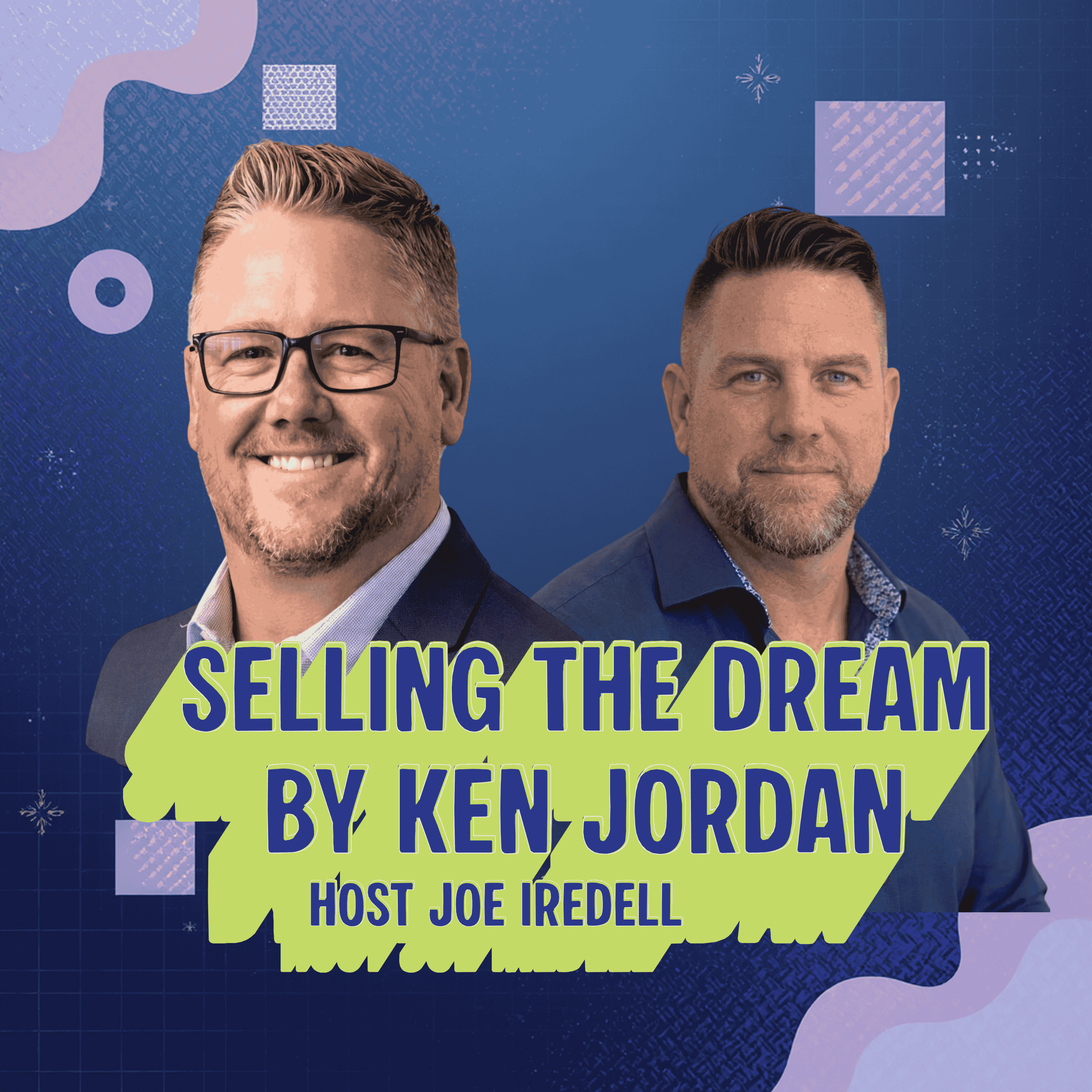
Let's have a conversation and have some fun. Hey, everybody. Welcome to Selling the Dream, a podcast for entrepreneurs, salespeople, leaders, and people who are just bored and want a good podcast to listen to. We are joined. I'm Ken Jordan and I'm joined as always with my partner from coming to us from Carlsbad, California, Joe Iredell. Joe, how are you, my man?
[00:00:39] Speaker B: Good man. Excited to. Excited to kick off another, another podcast today, brother.
[00:00:44] Speaker A: Yeah, we have some, some big stuff, some, some snow brewing where we are. I know our guests when we bring. Bring her on. I'm sure she's got, you know, doomsday forecasts on her on her feed as well. We're looking at like, I don't know, 13, 14, 15 inches in some or 188, who knows?
[00:01:03] Speaker C: Joe, do you miss it or zero, bro?
[00:01:06] Speaker A: You miss it?
[00:01:07] Speaker B: Well, when I miss it, I drive two and a half hours east and I can get all the snow I want out here.
[00:01:13] Speaker A: There you go.
[00:01:14] Speaker C: That's a good point.
[00:01:15] Speaker A: So I get the best. So coming to us from the great city of Pittsburgh is the one and only Kim Yacht. Kim is with P.
Sotheby's International Realty. We. So I was so excited for this episode. You know, the Pittsburgh connection was. I knew there was going to be one. Joe spent some time in Pittsburgh. Me and Joe. I don't know if Joe. If this came up. Me and Joe together spent some time in Pittsburgh. I forgot about for six weeks.
We were part of, get this, Kim. We were part of. Well, first of all, say hello to everybody.
[00:01:50] Speaker C: Hello. Hi, guys.
[00:01:53] Speaker A: We were part, when we were at the yellow pages, we were part of what they called a SWAT team. So we were pretty good at selling ads in the phone book. And when the book in Pittsburgh was behind, they were like, what are we going to do? So that they had an idea. We're like, bring these two guys from Philly into Pittsburgh and help sell ads and bring the book. And bring the book in. And it was a terrible idea. It was a terrible idea because, yes, we did sell a lot, but like two 22 year olds with too much time on our hands and way too much ego in the city of Pittsburgh. I don't know if they were ready for it.
[00:02:28] Speaker B: We did. I'll toot our own horns here. So we sold their quota for the year, like the first week we got out there, so then we had, like,
[00:02:37] Speaker C: a lot of free time and we
[00:02:39] Speaker B: basically had a month where. Where we were left to our own devices and thought that we were the coolest.
[00:02:44] Speaker A: Oh, yeah, we were up.
[00:02:45] Speaker C: When was this?
[00:02:47] Speaker B: 2001.
[00:02:49] Speaker A: 1002.
[00:02:50] Speaker B: Yeah.
[00:02:50] Speaker C: Okay. Yeah, I was just trying to think what was. Was kicking around back then.
[00:02:55] Speaker A: So what is it? Strip district, right?
[00:02:57] Speaker C: Yep.
[00:02:58] Speaker A: We're down to strip district till 2 o' clock in the morning in primary brothers. And getting up at like 6 and going to the office.
[00:03:06] Speaker B: It's been purposely erased from my hard drive in my. I don't remember any of that stuff on purpose, bro.
[00:03:14] Speaker A: So before we get too far along, as you know, we always like to play Two truths and a lie kind of gives us some insight into our guest and their ability to see. Joe is a natural lie detector. Kim, I don't know if I told you that. No, he is a. He's a natural light. So by the time we're done, he's going to get first crack at what he thinks is the lie and then we'll see if he's right. So, all right, let's start there. Two truths and a lie. Kim, give them to us.
[00:03:38] Speaker C: All right. Two truths and a lie.
[00:03:40] Speaker A: Not in any particular order.
[00:03:42] Speaker C: Okay.
So I absolutely love kidney beans.
[00:03:46] Speaker A: Okay.
[00:03:47] Speaker C: I had a baby at 19 and married at 21. And I used to sell magazines for International Readers League when I was 15 years old.
And I used to call things out of the phone book.
[00:03:59] Speaker A: All right, okay, I like that.
All right, let's see if we can figure that out. We studied your body language while you were talking and we'll see what we come up with.
So first of all, kid, thank you very, very much for joining us today. We love talking to salespeople, you know, and as a real estate professional, obviously, you know, you're incredibly successful for. I'll toot your horn for you. For those that don't know. And.
And I know that that journey is never a straight line. And, you know, I was excited to bring you on here today, but I want to talk a little bit about your early days. What did you do before real estate? And I mean, from the time you were selling magazines to the time you got into real estate, what was that like?
[00:04:43] Speaker C: So I feel like my journey has been. It has evolved authentically. And by no mistake and by my. In my experience with just kind of like my hustle. Right. So I feel like I got into the healthcare industry really young. I was, gosh, 20, maybe 20 years old 19 turning 20.
I took a job at Children's Hospital here in Pittsburgh. And I was a registration clerk for the patient access division there. And I slowly learned every facet of that, um, you know, department, you know, it had a lot to do. I was encountering a lot of. I have shifted my mindset to say clients, but at that point it was patients.
Um, you know, Children's Hospital was obviously a trauma hospital. I was their very front facing person whenever you walked in the door. And I worked an evening shift, which was obviously chaos. You know, always chaos. So long story short, I started off in that arena. I had slowly worked my way through some of the healthcare organizations where I then eventually landed at Shadyside Hospital, transitioned into upmc. UPMC is a, a very large healthcare organization here in the Pittsburgh area. They own a lot of facilities here where then I eventually got into management and ran the front business office of the Hillman Cancer center where I matrix manage to different cancer centers and radiation oncology divisions. So, so I kind of just got into that business, learned every facet of that business, made myself, I mean non expendable so they could put, put me pretty much anywhere. And I did that while raising a family, going to school and yeah, so I was in that industry for about 26 years prior to leaving for real estate.
[00:06:42] Speaker A: What was it like when you were working at the, when you were the, the, the, the front, the family facing person, the organization. I imagine that you, you're dealing with families that are going through very difficult times. Is that something that you like? Was that part of your job was to kind of communicate with those families and kind of, you know, was, was there interaction with them where you needed to like there was news and stuff like that.
[00:07:08] Speaker C: I mean there, there was always a lot of interaction with, with the patients because I was the front, the front forward facing person. I was the front line person. I was the first person they engaged from the time that they walked into the door. And that was most of the, you know, that was most of the jobs that I took there. But then when I became in a management role, not only was I in charge of their overall entire, you know, their billing, from their experience to their process through the, for the cancer center. I was, you know, I was a part of these people's lives. Were. One of the, one of the greatest honors I had time spending was at McKeesport Cancer Center. It was UPMC McKeesport Cancer Center. It was a very small community hospital and we were opening a new cancer center there with. And you know, you're not in a big hospital at that point. You're in a very small community. And it was, it was amazing because you were able to, you know, I felt like I was able to touch on those patients lives front and center because we were so immersed into the, to the overall clinical aspect of it. So we were kind of like one big family. So there were, there were times where I was having very hard conversations about drugs that weren't covered under insurance policies or for Medicare clients that couldn't meet medical necessity to get on a trial for, for cancer, like cancer protocols and trials if they didn't qualify. And then we would find community resources to get them on these trials. So I feel like my job has always been working with people and finding solutions for problems. So I found that was really easy for me to transition just who I was as a person and translate that into real estate.
[00:08:55] Speaker A: So it came natural. The whole compassion piece of that job was something that just came natural to you. You kind of felt like this was, this was, this was where you were supposed to be at the time.
[00:09:07] Speaker C: Yes, I've always been one of those people. I'll get into this later, but I recently experienced a ninja selling course. I went away for an installation which I got to learn a little bit about. You know, you know, they do the assessments on who you are and your personality. You know, I learned that I'm like, you know, a people, a, you know, a party power person, blah, blah, blah.
[00:09:30] Speaker A: But I can see that.
[00:09:31] Speaker C: I mean, I couldn't more. I feel like the thing that gets me up every day and the thing that keeps me going is they are the people. You know, I, I get my energy and I feed off of people and that's good, bad and because I, I bring a lot of that into me. So I always say that I'm the biggest introverted extrovert that you might ever meet because I love people, but I, I also take on a lot of their emotion, I take on a lot of their stress and, and I pride myself in being able to do that for people just to. Because you know, when they come to me for real estate needs in general, I mean, it's one of the biggest transactions you're ever going to have in your life. And I want it to be easy, I want it to be seamless, I want it to be stress free. So I just pride myself in being able to kind of do that for my clients.
[00:10:19] Speaker A: Taking all that energy sometimes is just a way to remove the friction, right? Like, yeah, I think that's great. You Know, empath or. Excuse me, introversion and extrovert. I heard a great. This describes me, you know, to. Is the. The introvert. It's not about whether or not you can get on camera or whether or not you can talk in front of people. People confuse extroversion with the ability to talk in front of people. And. And what. What I heard that. That resonated with me was, and both introverts and extroverts can talk to people. Introverts recharge in quiet. Extroverts recharge around people. And I am 100%. I recharge around people like I. I would have people around, and that's where I get my energy. So, like, on a weekend, I don't want. I want to be around others because that's how I relax to speak, you know, until I recharge. And I thought that was a really. That was. That was when I heard that, I'm like, wow, that. That's really. That's who I am. You know, Just so happens I'm also comfortable talking in front of people and don't have a problem. No. My wife says nobody loves Kenny's picture more than Kelly.
[00:11:26] Speaker B: You know, met a mirror he didn't love.
[00:11:30] Speaker A: That's. That's all true. But that doesn't make me an extrovert. Just makes me, you know, big fan of kj.
So at what point was your transition from real estate directly from, you know, the healthcare space to. To real estate? Was there anything in between?
[00:11:47] Speaker C: No, it was directly from healthcare. At the time, I had moved out of the hospital environment. I was working for a company here in Pittsburgh. I was working downtown, and they. I got moved to a remote. Like a remote position before. Remote positions were cool. You know, before COVID So I was working at home as a case manager for another healthcare. So I was doing health.
Like, I was working with a lot of Medicare clienteles. I was doing health risk assessments, health risk assessments for them. I was working with a lot of depressed populations and connecting them with resources in our community, people that were having hard times, paying their bills, so on and so forth. So I was working with kiddos that were having elevated lead levels at that point, tracking those kiddos and then, you know, getting them the resources they needed in the community and for their parents. So, yeah, I mean, at that point, I was just at a point where you think you want what you want when you want it. And then whenever I was working from home, I realized very quickly that I just didn't love that anymore. I needed to Be around people, even though I was having, you know, I can talk to the cows, come home. I'm. I'm one of these people that wake up in the morning, I have a phone call, usually by 5:30am Me and my girlfriend that I've been best friends with forever. We've known each other since we were kids. That's my morning. That's. I start my morning. I, I get on the phone with her, we have coffee together, we talk about our days and it just was not enough for me. I, I really wanted to be around people again. And healthcare, I mean, I'm sorry. Real estate was one of those things that I'd always wanted to do.
I woke. It was almost like I woke up one morning and said, you know what, I think I'm gonna go do that. And I did.
[00:13:39] Speaker A: There was no one in your life that said, hey, Kim, you should try this. I think you'd be good at it. Was it just an instrument?
[00:13:44] Speaker C: I mean, my husband, I will say my husband. We had had conversations over the years because real estate had always been fascinating to me. You know, I'd always been one of those people that loved house hunters and like, I would, I would obsess about house hunters and like, watch them all the time and, you know, keep an eye on the market just in and around me seeing what houses were, were selling for if I'd go on vacation. I was looking what's for sale around me and seeing what the price points were and who was buying those homes. So it was always something that I was very passionate about, but I just never really thought that I could do it because, you know, who's going to take, you know, their yearly salaried position that is comfy and just say, oh, let's just wake up tomorrow and be unemployed and just, let's, let's figure it out.
[00:14:31] Speaker A: It takes a special breed to make that decision.
[00:14:34] Speaker C: I kind of, I just, I went all in.
Yeah, I went all in and. Yeah, I'm sorry, Joe, I said, a
[00:14:42] Speaker B: confident person makes that decision.
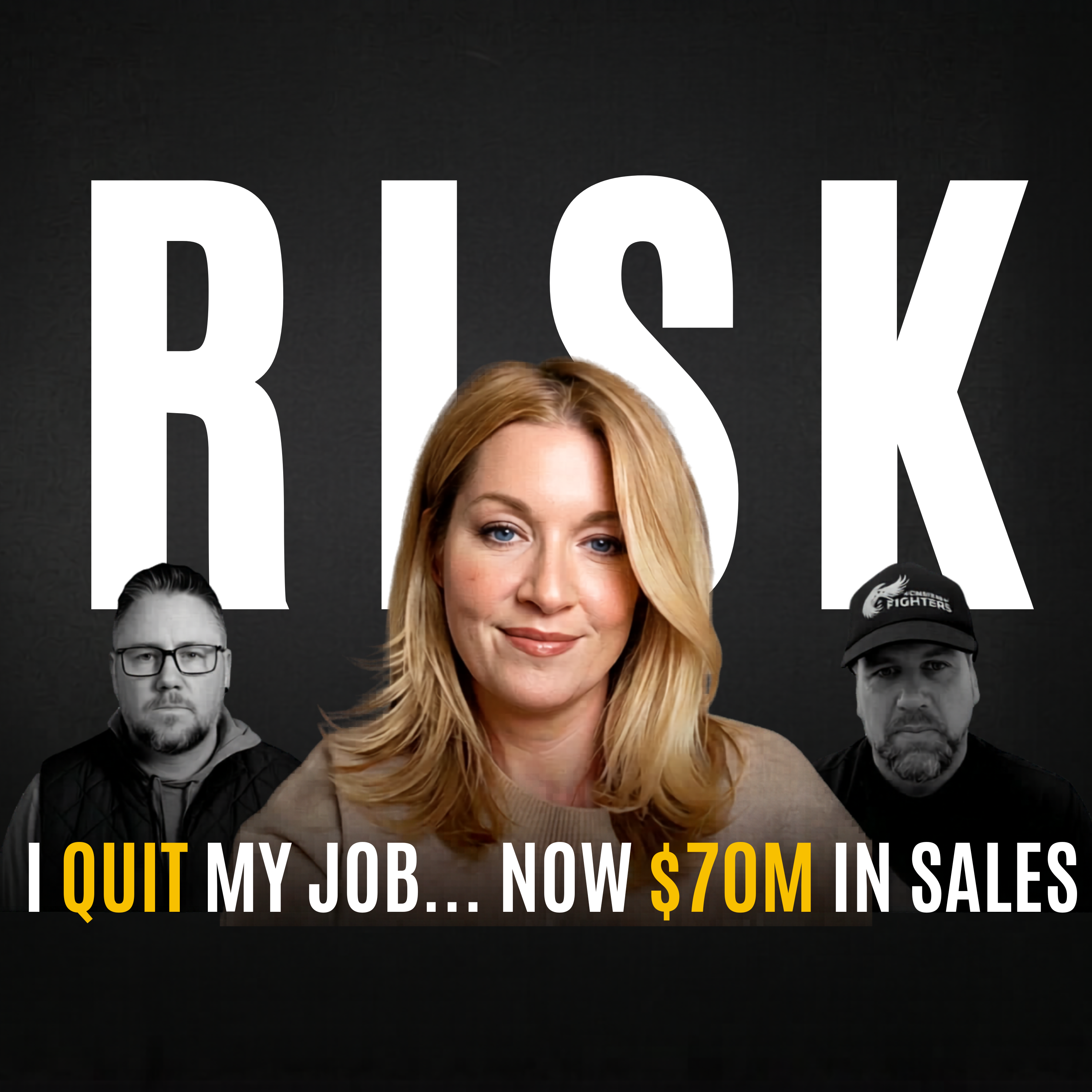
[00:14:45] Speaker C: You know, that's interesting you just said that because I feel like I have always been one of those people that have questioned myself, like, oh my God, can I really do this? But then have always been kind of a risk taker in my life, so. So as much as I always question my own, like, Kim, are you really going to do this? I still, I still can, I still can make those decisions. Um, so I did quit my job three months into doing real estate.
[00:15:12] Speaker A: So what's your girlfriend's name? Lisa, what did Lisa think of this decision?
[00:15:16] Speaker B: Good question.
[00:15:17] Speaker C: Lisa has known me my entire life. And Lisa, if you pulled her on this call, she would tell you that she probably was like, well, girl is crazy. But she's gonna do. She will be fine. Because that's just what I've always done. Like, anything I've ever said I'm going to do, I usually do it. And as my husband would like to say, I have a rush, the quarterback mentality, and that's just always what I've done. So love that.
[00:15:42] Speaker B: So it sounds like your first. The first part of your career is like, as you've described, or. I'm listening. Like, was probably, like, pretty emotionally draining with. Dealing with those types of situations. Was. Were you like, burnout or was it. Was it also something that, like, let me be on the other side of this, dealing with people in happy situations as opposed to.
[00:16:01] Speaker A: Who said real estate was happy?
[00:16:03] Speaker C: Well, well, but I, I feel like. I feel like the most parts are happy. I feel like you. Like, it's not as many instances. I mean, of course, whenever I deal with selling an estate when somebody has passed or, you know, a divorce situation or whatever sad story there might be surrounding a. A home, either sale or purchase, those are, you know, it is usually a happy time for people. And I probably never. Joe's really good. See, this is why you bring Joe on here, because I never really thought of that either. So I would say yes, I left Children's Hospital because that was extremely draining. I was working in an emergency room situation that was a trauma hospital, and I seen a lot of bad things, things that I probably would. Other. I mean, it was as fresh as I could remember them. I mean, it's like it happened yesterday. So I would say yes to that. And then I moved into. Which is so funny to me because as I think about my movement through the healthcare, I was placed in harder situations. I was always in the emergency room situations. I was working at the heart station. I was working, you know, in the outpatient clinic where people were coming in for their blood draws and they were really, you know, sick a lot of the times.
And then it went. It was cancer for a very long time. And then it was healthcare. It was a healthcare, you know, to. In. In these folks didn't really have anything. So I was. So, yeah, I would say yes, I. And. And it's not that I didn't love doing.
Might have just maybe gotten me to the point where I was so drained and I wanted to do something a little bit more positive.
[00:17:45] Speaker B: It kind of desensitizes you, I guess. Right.
[00:17:48] Speaker C: Well, I don't know. I feel like you do get desensitized, but I feel like I'm never going to be that person because I'm still so greatly affected by people's. Other people's trauma. I mean, I remember one time I was at church, and there was this woman crying in front of me, and I, like, my kids are standing there, and this woman's crying, and I don't know why she's crying, and I'm like, just. I just lean over and I, like, hug her. And I don't know why. I just felt like I was compelled to hug her. And my kids are looking at me like, is she really hugging this random stranger?
And. And I. I don't know. I. I feel like I just. I get what I need for me out of being there for other people. But you're. You're. You might be right, in a sense that it did become a little overwhelming at times dealing with that day in and day out.
[00:18:36] Speaker B: Yeah.
[00:18:37] Speaker C: Yeah.
[00:18:38] Speaker A: So. So. So you take the. The. The. Which. Side note, that's how this podcast started with Lee. Like, your. Your conversations with Lisa. Like, me and Joe would talk all the time, and it's just conversations having similar to this, but.
But we were like, you know, since we're 40, we're in our 40s. Like, I think we're supposed to start a podcast, so should we start a podcast? And that's what it is. And it's just conversations like this. But I love that you have that person, though. I love that you have that. That person that you can call that. I'm sure you've talked about every single topic under the sun with Lisa and, And the fact that she would say, you're crazy, but you're going to succeed. Sometimes it's that external confidence that you get. Like, Joe is. A lot of times Joe's been my external confidence where it's like, yeah, I don't know if I should do this. And you're like, dude, you'll be fine. You know, because, you know, that's just. And vice versa. So, like, that. I think that's huge. That's. That's. That's a. That's a blessing to have. I think that's cool.
[00:19:33] Speaker C: Yes, it is.
[00:19:34] Speaker A: So you took the. You say, so here we are. I got this transition from. From hospital space to the real estate space, lifting this burden that you're carrying, to take on this risk and excitement and unknown and this journey. Where did you start? Who was your first mentor in the business.
[00:19:50] Speaker C: So my very first mentor. And was interesting how I.
On my social medias today, I know at least a zillion realtors. They're, you know, on, on your, on your social media. At that point, I had one social media. I had one realtor on my social media. And at that point I had. And by the way, I've always been a hustler, kind of always done side stuff. I've been Bart. I've been a bartender. I owned a restaurant.
I owned a restaurant. Yeah, I did. We opened a restaurant and it was only open for a year, but. And that's a whole nother thing. But I've. I'm kind of always the person that's, you know, I was a server. I. I sold Mary Kay, I sold Rodan and Fields and did really well at that.
So long story short, I had this one realtor on my Facebook page because I sold real Rodan and Fields. It's like a skincare line.
[00:20:49] Speaker B: Oh, yeah. You know.
[00:20:50] Speaker C: Yes. And that was Melinda Lynch.
She has a, you know, she. I think she's with Keller Williams now. So I reached out to her and said, hey, I'd like to have a conversation with you because I would like to get into real estate. And her and I met for lunch. We really hit it off. We had maybe like a three hour lunch at that point. And that was. That was it. That was all she wrote. And I ended up joining that team. And I think I was with the team for close to almost three years, I think it was.
[00:21:23] Speaker A: And before you went, did you go out on your own? Did you go to another team?
[00:21:27] Speaker C: No, I went out on my own. So yeah, there were. The team environment was great. Um, I got. I loved everybody. And then my daughter joined my. My oldest daughter, Alyssa is in real estate also. She's 30 and she is also.
So her and I left the team and we then developed the yacht Howley Group at Pyatt Sotheby's. So we interviewed with pretty much all of the brokerages and we aligned the most with Pyatt Sotheby's. So that's where we ended up.
[00:22:00] Speaker A: What was the. As a new agent. If you're. You're face to face with an agent that's one year in the business, what was the number one thing you learned in the three years that you were with that first team that you still carry with you today?
[00:22:13] Speaker C: You have to. You can't. It's. It's. If. If you're doing this for yourself independently as a Solo agent. If you are part of a team, nobody's getting up to do this for you. You have to get up and do it for yourself. I think that's kind of the biggest piece of advice is, you know, and only with expanding and evolving my team and growing, trying to grow my team now, you can give, can give an agent all the tools, but you can't build in that hustle. That hustle has to be there. That desire that, that fire in the belly has to be there to kind of just immerse yourself in all things real estate. And that's kind of what I did. I mean, that there was no train. I was, I made sure I was in that office. I positioned myself to be around my team lead at almost all times. I mean, I schedule my day with her. I'd get in the car, I'd listen to her phone calls, I'd, you know, go on her showings. And then very quickly I feel like I had enough ability because, you know, I don't feel that real estate is transactional. I look at it as relationships. I was very easily able to translate that, what I already had, that I did well and translate that into real estate. I just needed to know, like the ins and outs, you know, real estate law, what, you know, let me learn my contracts, let me learn my timelines, Let me learn what it is that you have to do when you buy and sell real estate. But once I did that, I was, I was kind of off. You know, I did a little shy, my first year in real estate. A little shy of $10 million in real estate.
[00:23:49] Speaker A: That's impressive.
[00:23:50] Speaker C: Yeah.
[00:23:51] Speaker B: So. So when you made the transition though, was it like, did you have kind of a cushion or was this like, I have to make this work or I'm going to be broken out on the street? Like, was that, I mean, factor or was it just motivating? Like, I just want to crush it.
[00:24:08] Speaker A: Just.
[00:24:08] Speaker C: No, I, I wouldn't say that I had a cushion. I mean, no, I did have. My husband was working, right. So he had, he had a job. But I don't think anybody that has a two income household and completely severs one of them. You know, it's. And it's not like we had, you know, this big egg, you know, this nest egg, so to speak, because we were, we were basically coming off of a rebuilding season ourselves, you know, with losing our restaurants and, you know, digging out of all of that crazy. And so, no, it, it really was pure. Like, this is, this is going to work or this is not Going to work and then I'm going to go right back into the corporate world and figure it out. But yeah, no, I just was like, this has to work. I'm going to make this work. And I, and that's my, that's why I woke up every day and that's why I jumped right head first and that's why I just got out there.
[00:25:02] Speaker A: So it's interesting, the working a job like you had a career, a profession. Some people look at that like they have that, that open spirit. They want to build their own thing, they want to do their own thing. I want to move pieces around the board, you know, at their direction. They, they want to grow. Like, like that's in you. I think it's in us as salespeople and entrepreneurs and business owners. But your ability to excel at something, that was your cushion. And for young people that are starting out like they might be in a job, fine, be awesome at that job. Learn everything you can about that job. Because even though, and Joe will tell you like he, you know, he's a big proponent of jump off the cliff and build the plane on the way down. And I could see that. But knowing you always have something to go back to, you don't necessarily have to have a financial. But because you excelled at something already, knowing that if you had to go back for that, you would, I think is a, is a testament to your commitment to excellence in all areas of your life. Not just in the real estate, but you were committed to excellence at that job and that gave you the cushion, so to speak. Even if it was just a mental. I have to, I will. You know, Joe, how about, you know, when we were at the yellow pages and we were going on each other's appointments, how important was that in our ability to learn the ins and outs, the X's and O's, the nuances of the conversation, the ability to, you know, to use different tools in a way that maybe I hadn't thought of because we were listening to each other's presentations, listening to each other's pitch, how we prospect, how we spoke. Having that person that you can listen to shortens the learning curve. Dramatics.
[00:26:44] Speaker B: So like the whole what goes along with all of this and it's like I just found the most like boring sure fire way to be successful. And it's so, it's so boring, it's not exciting at all. And it's kind of like such a letdown that it all just has to do with reps. Dude, like we did so many. We Went on four times as many appointments as everybody else. So we got to see that live. And it wasn't. You didn't even have to be good at it. You just consistent and like, rep stuff out. And so that's where, like, when you make a transition to your point, like, if you're moving from job or you're going to go, I'm going to start this business, like, what you've. What. Hopefully what you focused on, whatever position you're in, is developing your skill set. And like, if you develop your skill set and you rep out, like, okay, I'm going to. I'm going to get better at listening. I'm better at conversation. I'm going to like whatever that is within the realm that you're working. And you just do it more often than everybody else. Like, it's transferable to everything you do. And then when you understand the process of the new venture that you're in, that, like, if you're trying to get better at something in that aspect of the job, just do it more often. So if it's cold calls, do more cold calls. You'll get better at cold calling. If it's like, whatever, it just, it's so boring because it's so simple. And you don't have to be good. You just have to do more of one thing over and over and try to stay, you know, in your lane. But that's, that's. I mean, looking back, dude, like, that's what it was. I don't think we were any better than anybody else. We just decided that we were going to triple, quadruple up our sales calls and go on each other's and get that experience where, you know, in a year, we were four years ahead of somebody that started because we had gone on four times as many calls.
[00:28:19] Speaker A: So, Kim, what's your daughter's name?
[00:28:21] Speaker C: Alyssa. Well, I have two daughters. I have two. Two daughters and two sons.
[00:28:25] Speaker A: Okay, now Alyssa is your business partner?
[00:28:28] Speaker C: She is.
[00:28:29] Speaker A: When she got into the business.
[00:28:31] Speaker C: Yes.
[00:28:31] Speaker A: Where you, like, you're going to sit and you're listening and you're to listen to me every. You're going to go on my sales calls, you're going to go. My listing presentations. Did she do that as well?
[00:28:39] Speaker C: She did. She was very. So Alyssa is, you know, I think, hands down one of my best friends. She's my daughter, but she is really one of my best friends. And a lot of the feedback, the
[00:28:51] Speaker A: other three kids know that.
[00:28:53] Speaker C: Yes. But I will say is that she's younger than you.
[00:28:57] Speaker B: What's that, that because she's only, say, 19 years younger than you or so.
[00:29:01] Speaker C: Look at you digging in there. I like it. Yes, probably. But I think that, you know, she has watched me, you know, she's been with me for so long and she kind of grew. I grew. I kind of grew up with her. Right. But what I was always able to establish up front with her was I am your mom, but I'm also your, your friend. And I always. And that's with all of my kids. Like, I just always want to be a safe space for them and I'm always truthful with them. And I don't. You know, I'm not one of those people that get really tied down with a lot of obnoxiousness. Like, people are people and people are going to do things. And so I was kind of like a cool mom, you know, so. But, but I didn't blur those lines. Like, I'm mom, but I'm also a realist, you know, like. But yeah, she, she, I think she, she's so good at so many things that I'm not, and I think vice versa. So. So she's just, she's so soft and I love that about her. And I feel like the, and I feel like I attribute that to, you know, maybe having a really nice, you know, she had a comfortable childhood and, you know, we didn't want for much and we worked really hard and you know, I was really involved and you know, when you have somebody that didn't come from that as much, you know, I worked really hard for everything that I've gotten in my life. So. So I think she's just watched me evolve and she has learned so much just from me and her dad, who, you know, is also very hard worker. We work very hard for things. But yeah, she's, she's, she's great. She's just a soft person in general, but she's like, really good at like, you know, just relating to people. People love her.
[00:30:46] Speaker A: As you, you progressed into your, your new role with the team you're building now, um, what, what was your.
[00:30:54] Speaker C: So my best year was a couple years ago. I think on market and off market we did about 14 million. So then it kind of. I, I've hovered between like 10 and 14 ish every year that I've been in the industry. Um, I will say that last year I was a little shy of 10, but last year was probably hands down the worst year personally for me. So the amount of business that I was able to do last year, providing that I mean, just to give you an example, April to June last year, I didn't have one transaction closed. Yeah.
Which, which is a huge pocket of time. That's a, that's a healthy, busy time of. And I, I sat there transactionless. Um, and I will say that.
[00:31:43] Speaker A: What, what did you, what did you draw on to get through? Because $10 million is.
[00:31:47] Speaker C: Well, I'm going to be honest, Ken, it wasn't easy.
[00:31:50] Speaker A: Yeah.
[00:31:51] Speaker C: I mean, I'm going to say last year there was a point where I thought, I need to get my ass out of bed because I need to get up, I need to remind myself who I am and I need to get back on this horse. You know, I feel like in this, this real estate industry, we, we work so hard, right? And we chase, we chase that, right? Because like.
And I never really am a numbers. I don't really like to look at numbers because that's just not who I am as a person. I honestly couldn't last year. I only knew what I ended up doing in regards to production because I ended up looking at it at the end of that year because I didn't want to know. I did not want to know.
I'm like, I probably did crappy. I don't want to, I don't want to see those numbers. I was embarrassed that I pulled, you know, that I put myself in a position where I might not be able to come out of that, you know, that lull.
But I did and I got up and I finally just, I crawled my way back out of that nasty situation. I'm like, I'm just going to get back to business. And that's what I did. I was, I'm grateful for that opportunity just because I realized that my business is my business because of who I am.
And that's why I align with the people that will always do business. I mean, I feel like I've done a good enough job with the people that I have done business with that anytime that I'm in those rooms or anytime any of those people are in those rooms, they're going to speak my name if real estate is brought up. And that's what I trust. And that's what's, that's been my experience. So I just, you know, I wish I can say I'm, I'm, you know, one of those agents that do all the mailers and do all the things. I'm not. I'm just a referral based agent. And, you know, last year was a crappy year, but I picked myself up and Just was like, get your butt out of bed and get back to work.
[00:33:46] Speaker A: Kim, you. You were. I love that you share this kind of stuff. And part of the reason why, I think when we. When I originally spoke to you a couple weeks ago, I said, you know, I was. I was inspired by your vulnerability on social media, was that part of the process for you was sharing what was going on in your world, the good and the bad and sideways. Was that also part of your process of. Of. Of finding your way back into what you knew you needed to do and what you were capable of?
[00:34:14] Speaker C: I don't think that I thought of it in the time, Ken. I don't think that I thought that that was a part of.
[00:34:20] Speaker A: How did you want to share that? Like, what made you want to be so raw? I'm.
[00:34:24] Speaker C: Well, because I feel like that's just. I. I feel like that we spend so much time looking at so many things that are so fricking produced and real and inauthentic, and I. I am. I am a person that. I can feel your energy within three seconds of meeting you, and I know it's going to be good or bad. I. And you know what? I just don't want to be like that. A lot of the things. A lot of the ways I've been able to relate to people in my life has been because I am as authentic as I possibly can be and because I am not afraid, because 99% of us are just trying to make it through the day, right? We're just trying to make it. You're trying to make it. You're dealing with stuff, Joe. You're trying to deal with stuff. We all are trying to deal with stuff as we show up, you know, and pay our bills and do the things that we need to do as parents and as wives and as spouses and in friends and family. And there's no better way to connect with people than just being your authentic self. And. And I don't care if you don't align with me by how I project and in my emotions and. Or if I'm too raw for you or if I put it out there a little bit too thick, I really don't care, then you're not my people. My people will find me. And that's truly. I didn't realize that I needed to be more like that, and I think that that was helpful for me to climb out of bed. It's just because people were reaching out to me, and they're like, girl, like, I can't, like, thank you for saying that, because I'm going through that too. Or, you know, I relate to you so much you have no idea. Or like, you say all the things that I really want to say, but nobody has the balls to say them. But I do, because I really don't care. I don't care to be fake. I don't care to be anybody but me. And like I said, I used to care if people didn't like me. But because I made a comment today on one of my threads, I posted something today and I said I used to not really share as much about myself because people, I've had people in my life or in my orbit at that time say, well, you're just bragging or you're just, you know, that's fake. Or you're just looking for, you know, attention. And I thought to myself, I'm like, why would anybody care to do that? And more importantly, you know, I remember somebody saying to me, like, well, you didn't share A, B, C and D about, you know, all this tragics or all these things that you're going through? Well, no, because we're all just again trying to get through the day. It's not here. We're not here to just. I don't know. I guess the point is I truly just. I don't know any other way and I'm not afraid to, you know, maybe I overshare, but I, I don't think I do. I feel like I say a lot of things that people feel a lot of times. And you know, I think that that is remarkable. I feel like that people feel like they're comfortable with people that can, you know, get on their level and, you know, understand where they're coming from. So. And it's. Maybe it feels like you're not so alone, you know, like you're, you're, you have some support. So.
[00:37:24] Speaker B: Yeah, so you mentioned, you mentioned your restaurant.
So what are some of the lessons that you learned from the restaurant?
Like that you take into your real estate career?
[00:37:35] Speaker C: Well, the restaurant was kind of, at that time, that was kind of my husband's deal, but I helped him open it.
[00:37:41] Speaker B: Okay.
[00:37:42] Speaker C: We both been in the serving industry. He had been in the, he had done general management. He had opened a restaurant before. You know, he was part of opening a restaurant before. And at that point he had taken one of his opportunities where he actually lost a job and he was working for a financial wealth company and he ended up losing his job. And he woke up one day and he said, you know, I think I'M going to open a restaurant. I'm like, all right, let's do it. Like, I mean there was no, I
[00:38:13] Speaker A: guess typical Kim fashion.
[00:38:15] Speaker C: Let's do it.
[00:38:16] Speaker B: I knew here.
[00:38:18] Speaker C: Yeah, I mean, I just, I am one of those people that will think that you really can't. And I'm like this with my son, My son just. We went through the same thing with my son. You know, my son went to school, got a degree, tried out what he wanted to do. He's in a completely different field and my, you know, my ex husband is, you know, like, oh, you shouldn't quit his job. You shouldn't do this. You don't. I'm like, why not? He's, he hates his job and he went into a completely different line and he's now working with one of the best, you know, luxury custom home builders in Pittsburgh and he's their pre construction manager and he's selling real estate for Christ's sake. He's living, he's, he's like making six figures, doing what he likes to do. So, you know, I've just always been a huge proponent for people just doing, you know, what feels right and what you want to do and God knows, you know, we need something to make us happy. Don't sit in a, in a position where you, you know, you hate what you do. I mean, so what I took from that is we did it, we tried it, it didn't work out, but we could say we did it and it was fun while we, we. It was.
[00:39:18] Speaker A: What kind of restaurant was it?
[00:39:20] Speaker C: So it was pretty cool. Um, it was called J and L Grow Company. It was down in the south side and it was in a really cool area. Um, if my husband listens to this, he's gonna, he's gonna be mad. But I told him it was too, too big. I said it was too big of scale. Cuz I wanted to do like a little beer and shot place, you know, with some good food and I'm like, it's too big, it's too big. And it was too big, but, but it ended up being a, you know, we just didn't get the trajectory of, in the, the, you know, people coming in the doors. But it was called JNL Grill Company. It was pretty cool. It was before like the burger and craft beer, you know, things were cool. You know, we had like 31 taps. They looked like, had like, it was like really industrialized in there. It was pretty, pretty awesome.
[00:40:04] Speaker A: I have to say.
[00:40:05] Speaker C: We had hundreds of craft beers and we, you know, like Our burgers were like the Eliza Furnace burger. And we had, like, it was all after, like, you know, the steel company. Like, the steel. So we had. So, yeah, it was pretty. Pretty awesome. And anybody that remembers it, they. They. They talk about it fondly. And we did, like, all of our own wing sauces. We created all of our own burgers. So it was pretty. It was a. It was a fun time. And I was. And I bartended there, so that's rad.
[00:40:31] Speaker A: Does sound fun.
[00:40:32] Speaker B: But that, like, the. The why I. Why I brought up though is like, it's so. Every time that you hear a success story and people, like, there's. Along the way, there's so many, like, little footnotes that in the moment, you would seem like it's like a tragic. You're like, oh, this didn't work out, or whatever. But, like, when you look at the collection of most people who are successful, there's just like a whole, you know, list of these things. Like, we tried this, but it didn't work. And I tried this. We got into this and, like, you don't realize, like, as you go, like, this is building what your future worth and your skill set talked about before. This is how it all develops into being successful down the line. So. Yeah, that's really cool. Thanks for sharing that because that's.
[00:41:13] Speaker C: Yeah, thanks for asking.
[00:41:14] Speaker B: And that is important to note.
[00:41:16] Speaker A: It also. It's. It. Listen, it. Some people don't have it in them, right? Some people don't have it in them to. To live the life of their dreams because they can't get past the momentary adversity. Like, that would have stopped and crushed someone else. It just. The truth. Some people just don't.
[00:41:35] Speaker C: Yeah.
[00:41:36] Speaker B: Final.
[00:41:37] Speaker C: I mean, and it was. It was a tough time. I mean, we lost every. I mean, it was. It was not an easy time. And when we. More importantly, we had to, you know, like, let people go, that was number one. That was the hardest part. Right? And then we were deep in the hole, you know, it was just not, you know, thankfully. We saw the forest through the trees, and we were able to kind of, like, cut it off at the knees before things got too bad. But it was still a great loss. But we had a lot of fun, you know, doing it. We, you know, we constructed that entire thing, like, from, like, the ground up. We hired the people I trained. You know, we. I was hr I was kind of all the things.
[00:42:11] Speaker B: Restaurants are the hardest. That's the hardest, hardest business. I think it's like they say, you want to become A millionaire, be a billionaire and open up a restaurant.
[00:42:20] Speaker C: Yeah. They say what the first year is the hardest, and damn it, it was. And we didn't have enough. We didn't have enough. You know, we just. We were this close. We were actually on the verge of like, creating some. We were integrating entertainment in like, we had like Tony Jamflone and we were like bringing people in and like, playing music in there while we were like, doing. So we were doing like, little venue things, but, you know, at that point, we. We just didn't have enough overhead and the rent was just like, insane down there in the south side works. It was just insane. So, yeah, we just keep our heads above water.
[00:42:55] Speaker B: Costs go up, and you can't. You can only pass so much on the customers and.
[00:43:00] Speaker C: Yep.
[00:43:01] Speaker A: So you just finished up a NINJA installation. I love Ninja Selling. I swear by it.
I've read it three times. I give it as a gift to agents. I give that book Ninja Selling to agents.
What. What's your biggest takeaway from the installation and what's next for you and your team?
[00:43:21] Speaker C: Sure. Biggest takeaway is, you know, kind of, you know, NINJA installation was gratifying for me because said, you know, I had read the books, but even at reading the book didn't really give me the. The. The affirmative. Like, I was very confident that I was already doing some of the things that NINJA Selling was that. That teaches you, right? It's, you know, that what you think upon expands and, you know, there's. There's just so many things that I had already been doing. And I'm like, you've. You've gotten this thing figured out. You've cracked validating, right? So. But what it really did was it provided me a really great reset on, you know, getting me back, you know, coming off of that really tough year personally for me. And with business, it really did put me in a really good frame of mind to just say, you know, okay, like, back to business. You know, get your systems in place to like, to the umpteenth degree, you know, get back in.
Get back out there and start calling your people top 200.
Yeah, I mean, there's, you know, I don't. Ken. I don't even know how much real estate I've sold in the past almost six years. Isn't that crazy? But that's just. That's just how much.
That's crazy to him.
[00:44:35] Speaker B: He would. He couldn't comprehend that I'm gonna find
[00:44:38] Speaker C: out and then I'll shoot you that number. You know, I would say 10 if it's at least almost 70 million, I would say around there, but I'd have to do the numbers somewhere around there, like with give, give or take on off market, you know, I. What's. What I just real, you know, NINJA was just a great reset for me. I think that, you know, the Ninja 9 doing those activities that, you know, will connect you with the people. It's not about, you know, a transaction. It's about building relationships and keeping your mind right. It's investing in yourself as well and taking the time. Gratitudes, affirmations, what you think of. Like that. That's a big one for me. Like what you think on. What you think on it expands.
[00:45:24] Speaker A: So good or bad activator, right?
[00:45:27] Speaker C: Correct.
So, and then as for what's next for us, I mean, we're, we're just getting back to business. I mean, currently we're, we're pretty busy right now. We, I think we have 10 to 11 pending transactions so far. We have a lot of things in the pipeline coming. I'm really just trying to stay on top of this. That. Those relationships, those touch points that I, I, you know, got away from last year. Um, and again, it's not that it was intentional. It was just necessary for me to take a breather. So, yeah, just refocus and get back out there and kick some butt.
[00:46:03] Speaker A: I'm excited for you and I think that you're. What you've done. The success you had, almost purely on intuition. Couple that with the execution and the structure and the know that NINJA gives you. Can't. I, I can't imagine you're not going to have an unbelievable 2026. So.
[00:46:21] Speaker C: Thank you.
[00:46:22] Speaker A: I wish you the best. Now we come to our favorite part of the show.
We guess which. Which were the li. Which one of the facts was the lie. And I, I think I know.
[00:46:34] Speaker C: All right.
[00:46:34] Speaker A: And there were some clues in there. All right, so let me just reframe them, restate them. Love kidney beans.
Had a baby at 19, married at 21. Sold magazines at the age of 15 years old. Joe, which one of those is the lie?
[00:46:50] Speaker B: So I, I think it's pretty well established that number two is not the lie. Number two, but. So the devil's always in the details. So, like, it could be like, no, it wasn't 19, I was 20. Or like, you know, I didn't get. Actually get married. So we'll just assume that like that this is.
We're not getting too tricky here with that one.
In order to get a job at like a. umpc or like, one. You know, like, something like that.
[00:47:16] Speaker A: You.
[00:47:17] Speaker B: You need to have previous experience. So I think having a job at 15 selling, you know, that's going to help you get a. Get a pretty good job at 19. So I. I also think that one's true. I don't know anyone that likes kidney beans, so I like kidney beans, so if that. But. But then she also described, like, the menu at the restaurant, so it's like, it didn't include kidney beans. So that's like. So I'm gonna go with.
[00:47:43] Speaker A: In all fairness, though, it didn't. She didn't. She didn't give us the whole menu, but I agree.
[00:47:47] Speaker B: But that's where. That's where I was.
[00:47:49] Speaker C: All right. So, Joe, you're going with kidney beans is the lie.
[00:47:52] Speaker A: Yes, I'm gonna also go with kidney beans for a different reason.
[00:47:56] Speaker C: Why is it your reason?
[00:47:57] Speaker A: I think that you and your husband argued whether kidney beans should be on the menu or. And he won.
All right. Which was the lie?
[00:48:05] Speaker C: You both are exactly right.
You're absolutely right. So I was pregnant at 19, married at 21. I did work for International Readers League at 15. I had, like, some random way that I was able to work, like, with a. Like a junior permit or something that, you know, and I literally.
[00:48:25] Speaker A: What was that job?
[00:48:26] Speaker C: So it was. I literally called numbers out of the phone book. Like, I legit had a phone book, and I would take a highlighter and call these people and sell magazines, and that's what I did.
[00:48:36] Speaker B: And similar to that, we sold coffee in college. Like, that.
[00:48:40] Speaker A: We did.
[00:48:41] Speaker C: And I was really, really good at it. Fifteen. So there's. That's. That says a lot.
[00:48:46] Speaker B: Pittsburgh's, like, been always, like, really pro getting the kids working really young, you know?
[00:48:51] Speaker C: Well, I will say this, though. I worked really young because I needed to work really young. I. I've always been a worker. I was selling papers. Like, I don't know if you guys are old enough to remember, so my girlfriend at the time sold papers, I should say. But I used to walk around with her, and she gave me a couple bucks. We would have the ring where we'd go and collect, and you'd tab off the things and go and collect money from the doors. I've always worked, so. And it was just. It's. It's just always been in me. I loved to work and make my own money.
[00:49:19] Speaker B: That's crazy. I sold in front of our church for years.
[00:49:22] Speaker A: Really?
[00:49:22] Speaker B: Yeah.
[00:49:23] Speaker A: Philadelphia.
[00:49:23] Speaker C: We should do a little poll about all the people that basically work for themselves.
[00:49:30] Speaker B: I made decent money. Like, it was. You make, like, 100 bucks on a Sunday. And like.
[00:49:35] Speaker C: Yeah.
[00:49:35] Speaker B: At 13 years old, that's like.
[00:49:38] Speaker C: That's what I mean.
[00:49:40] Speaker B: Yeah.
[00:49:40] Speaker C: Yeah.
[00:49:41] Speaker A: My dad got me an anway when I was 14, but that didn't pan out.
[00:49:44] Speaker B: Yeah.
Yeah.
[00:49:47] Speaker A: All right, so kidney bees. Why? Why kidney bees?
[00:49:50] Speaker C: So my mother used to make chili, and I love. I love the taste of chili, but it was a texture thing for me. I just can't get past that texture.
[00:50:00] Speaker A: Like, the pinto beans are out, too.
[00:50:02] Speaker C: But wait, I can eat them now and tolerate them. Whereas before, my mom would be crazy. Like, she'd make chili, I'd pick all the beans out, all the kidney beans out, and put them on the side of the plate. And I will still eat them if now as an adult, but there's just something about the texture of them.
[00:50:20] Speaker A: I'm just interested.
[00:50:22] Speaker C: Like, no, thanks. But yeah.
I just think it's a texture thing. But I do love a good. I like a pinto bean, but I think if they're too mushy, it's bad. If they're too hard, I'm like, oh, God, please. I get sent bury me with lilies. I can't do it.
[00:50:36] Speaker B: I see. I'm not. I'm not. I'm not up on my lentils, and I'm just.
[00:50:42] Speaker A: I didn't.
[00:50:43] Speaker B: I thought beans were beans.
[00:50:45] Speaker A: I'm literally making chili on Sunday, and I will take a picture and send it to you.
[00:50:50] Speaker C: Yes, please.
[00:50:53] Speaker B: Are kidney beans just beans? Like, are. There's different types of beans.
[00:50:57] Speaker A: I feel like they got northern beans, you got red beans, you got kidney beans, you got pinto beans, those nasty
[00:51:03] Speaker C: navy beans or whatever they're called. They're like, you know, the big ones, those butter beans.
[00:51:10] Speaker B: I thought all beans were the same. I mean, people just in different regions called them different things.
[00:51:14] Speaker C: No, no, no.
They're different. If you look up the. The. The. My least favorite bean, and I don't even know why I didn't say it was them. Those butter beans, my dad used to eat them, and my mom used to put them in, like, this microwavable tray with all this nasty butter and salt. The smell used to just send me and those things. I would hear him crunching on them. I can't. I can't even talk about it. I don't want. But I'm not a bean person. Sorry.
[00:51:41] Speaker A: Who knew, right? We got some passionate conversations around beans.
That's my takeaway from today.
[00:51:46] Speaker B: Spill the beans.
[00:51:47] Speaker C: Listen, I can talk about anything. You just have me back and we'll talk about whatever you want.
[00:51:52] Speaker A: I can't wait. I hope you will come back. I really enjoy these conversations. I hope you did, too.
[00:51:57] Speaker C: Yes, I did.
[00:51:58] Speaker A: And I'm grateful for you. For you hanging out with us today and, you know, hopefully. Yeah, hopefully. We'll. We'll chat again soon.
[00:52:03] Speaker C: Yeah, anytime. Let me know.
[00:52:06] Speaker A: All right. See you guys.
[00:52:07] Speaker C: Thanks. Nice meeting you too, Joe.
[00:52:09] Speaker B: Yes, indeed.
[00:52:10] Speaker C: Thanks, Sam.