Episode Transcript
[00:00:00] Speaker A: Foreign.
You're listening to Selling the Dream. This isn't an interview, and we're not journalists. But each week we'll ask our guests to open up and share their secrets to business success.
Let's have a conversation and have some fun. Everybody. Welcome to another episode of Selling the Dream. I am Ken Jordan. KJ The Closer. Got a new nickname, Joe. Joe doesn't have a nickname today. Joe has a nickname. It's Jojo.
Today's Joe's nickname. So when I refer to Joe, I'll refer to him as JoJo or to our guest today, Yosmar Vincent, otherwise known as Joe from Scott Realty Group, a very good friend of mine and realtor, partner, and world traveler and dignitary and Venezuelan royalty.
So how long? Thank you very much for joining us.
[00:01:01] Speaker B: That made me laugh.
Okay, then. Quite the introduction. Hello, everybody.
[00:01:07] Speaker A: I know. And we're only in the first 49 seconds, right? You gotta hook them early, Joe. That's the. That's the key.
[00:01:13] Speaker B: Wow.
[00:01:15] Speaker A: Okay, first of all, Jojo, how are you?
[00:01:19] Speaker C: Great, man.
Yeah, you know, send you a text the other day. I didn't get a response back. I'm going to be in seacaucus, New Jersey, second or third, rather, October 3rd. See if you can make it out, bro.
[00:01:34] Speaker A: It's going to be my library books that day, but I'll double check my schedule.
[00:01:41] Speaker C: I got it.
[00:01:42] Speaker A: Where. Where are you fighting?
[00:01:44] Speaker C: The Meadowlands Exposition center or something? Okay.
I've never been there, but I don't know.
[00:01:53] Speaker A: It's not someone's backyard. It's a caucus.
[00:01:56] Speaker C: No, no, no, no. It's a big one.
[00:01:58] Speaker B: In an alley. It's the bottom of an alley.
[00:02:01] Speaker C: This will be for the Pan American Championship, so.
And I got a very tough guy I'm gonna beat the shit out of.
[00:02:09] Speaker A: Wow.
[00:02:10] Speaker B: Okay, then send the video.
[00:02:12] Speaker C: Yes, indeed.
[00:02:13] Speaker A: He always does send videos, Joe. So I will make sure you get a copy when he forwards it to me.
[00:02:19] Speaker C: Yeah, I win.
[00:02:20] Speaker A: How are you?
[00:02:23] Speaker B: Who, me?
[00:02:24] Speaker A: Joe? Yes, your Joe, Jojo.
[00:02:28] Speaker B: Well, it could be East Coast Joe and West Coast Joe as well.
[00:02:32] Speaker A: We could have gone that way.
[00:02:34] Speaker B: I'm doing great.
No complaints at all. The sun is shining, the sky is blue, and summer is never long enough for me. But we'll enjoy it as it comes. So everything is fine, Work is wonderful, family is doing wonderful. Knock on wood.
And I have no complaints at all.
My only little, not little, but huge sadness in my heart is because of the situation in Venezuela. As you know, I am Venezuelan by birth, upbringing, and, you know, half of my heart Is there always.
[00:03:14] Speaker A: Well, we're going to get into that a little bit today. I want to talk about that for
[00:03:18] Speaker B: sure, but other than that, we're fine.
[00:03:22] Speaker A: Awesome. So, Joe, first of all, thank you for joining us today. I was really excited to have you on. The intro was real.
I've always felt that you are one of the most compelling people I know.
[00:03:35] Speaker B: That is English for Weir.
[00:03:39] Speaker A: Not at all interesting.
You know, I, I, I know, I know your story, your backstory, but I wanted for, for our listeners, I wanted you to kind of just start, you know, a little bit from the beginning. You know, where you come from, your journey to, you know, United States, and then your journey into the real estate business.
But let's, let's go, let's go back to the beginning.
[00:04:04] Speaker B: That has a lot of stops.
Yeah, that's like Route 1 or I95 from Maine all the way to Florida.
As I mentioned, I was born and raised in Venezuela in a wonderful family where by circumstances of life, it was an extremely matriarchal family.
I was raised by four mothers.
[00:04:29] Speaker A: Hold on, hold on, hold on. Yeah. Do this every goddamn time. Joan, before we get started, I keep forgetting to ask the two truths and a lie. Jojo was supposed to remind me. He never does.
[00:04:39] Speaker B: The two truths and a lie. Okay, let's start. Okay, let me see.
[00:04:44] Speaker A: Give me your three facts in any order. Don't tell us which one's which, and then we'll try to figure it out at the end which one's the lie.
[00:04:51] Speaker B: Okay.
I did have the opportunity to have a jam session with Brian May, the guitar of Queen.
That's one.
I was the top swimmer of my swim team in high school. That's two.
And I had a chance to play the piano in the White House. That's three.
There you have it.
[00:05:17] Speaker C: All right.
[00:05:18] Speaker A: White House. Joe, you got that?
[00:05:19] Speaker C: I got those.
[00:05:20] Speaker A: All right.
[00:05:21] Speaker B: Okay.
[00:05:21] Speaker A: All right. So now you're in Venezuela.
[00:05:25] Speaker B: You were raised once upon a time.
[00:05:28] Speaker A: Yes.
[00:05:28] Speaker B: Matriarchal family.
Four amazing women.
Two of them divorced, one no. And two of them widowed, including my mother.
So it was my grandma, her sister, my Aunt Estrella, which I call Mama Estrella, and my mother. So I had four mothers, and it was a household in which it was very much.
There was two things that were an obligation. One was you had to study, especially for a woman. My mother was a lawyer, and she, you know, every person in her generation, every woman in her generation already had a profession was university grad, master's, et cetera. So my mom was very like you have to be self sufficient when you are a woman. Regardless, you have to have a profession. You have to be very independent. And the other thing was music. Everybody had to study an instrument. No negotiation. The only thing you could do was pick what instrument you were going to study very seriously, very conservatory, Russian style. Education in both ends. So I went to university when I graduated high school at the age of 15, yes, I was very young and I skipped a lot of grades, went for political science.
My mother wanted me to be a lawyer. Heck no.
And then when I graduated, I did my master's in public international law in the Netherlands.
Massive waste of time.
Wonderful. Very entertaining. I had a lot of fun studying.
[00:07:10] Speaker C: Yeah, the no Netherlands are pretty fun.
[00:07:12] Speaker B: But you know, for starters, just think about it. I did my master's when there was still the east and the west understanding, you know, the communism versus the whole end of the Cold War era. I mean, I'm not young.
This is the world that I remember. At the end of my university, you couldn't even draw the map of Europe anymore because there was countries coming up every other day. Oh, this one separated. Now it's not Yugoslavia, now it's Serbia and Croatian.
So then after that I worked in the congress in Venezuela.
Didn't like it at all.
Needless to say, politics really don't mix along with someone that has a lot of troubles telling a lie.
And I ended up working for the Foreign office in the position on a consulate.
My destination was Bonaire.
Beautiful. I could see the beautiful waters of the Caribbean from my window every day, all the time.
Then I married my now ex husband who is an American citizen. And even though I had no intentions whatsoever to ever move to the United States, I wanted to continue with my career.
One day he decided that he wanted to move back. So we packed, came to the United States. My first job in the United States was as a teacher.
I taught Spanish and I taught music from there.
I ended up teaching English as a second language in the Brandywine School District in Delaware for 17 years.
That was too much, too long.
[00:09:11] Speaker A: That's a whole other career.
[00:09:12] Speaker C: Holy Matt.
[00:09:13] Speaker A: Yes.
[00:09:14] Speaker B: Oh yeah. I have reinvented myself so many times, you have no idea. I conducted musical theater groups, choirs. I'm also the music director at St. Timothy's Lutheran Church in Aston in Pennsylvania.
And I, I actually decided to take the the realtor classes. And you're gonna laugh at me. It was really true to God. The worst case of empty nesting in the history of humanity.
I raised my daughters as a divorced woman.
My Entire world, my life, my everyday, even my work schedule was always tailored around the needs of my two daughters.
They are a year apart, so it was very much like one after the other one graduated high school.
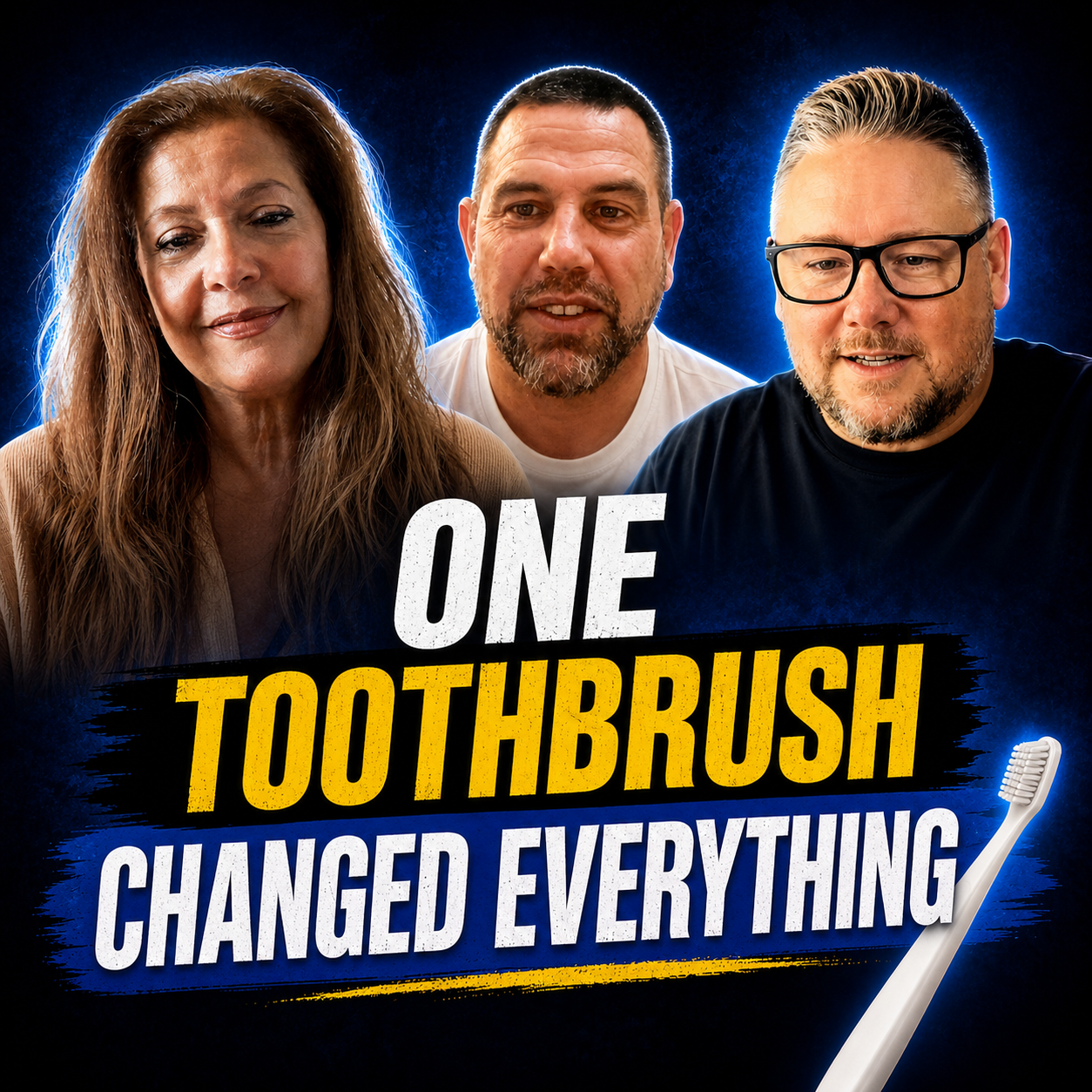
And I was so sad. Every morning I would wake up one toothbrush instead of three. That was it.
So Scott, after making me sit, my now husband, my then boyfriend, making me sit to watch Game of Thrones, which we actually binge watch nine seasons, I had to wait for the 10th one as a form to distracting me from all of this.
Nothing, you know, I would go back to my home and the second I entered the house, it was just this silence.
So he suggested, why don't you take the real estate classes so you put your mind somewhere else.
I said, okay, fine, I'll do it. And I really went in thinking, this is going to be like, you know, I sit there and I just listen to somebody and I can just check my emails and don't really pay attention and whatever.
First class, I picked up my books outside the class at Pauly Associates.
Walked in, the first teacher comes in, which I don't remember his name, I just remember that I called him Professor Snape.
[00:11:28] Speaker A: Snape.
[00:11:29] Speaker B: So Professor Snape walks in and asks a question, you know, and says, I imagine all of you already read the first four chapters of the book. And of course me, the idiot raises her hand, excuse me, but we just got our books outside, so we really haven't had an opportunity to read the story. And he ripped me up a new head right there and then in front of everybody.
And I didn't open my mouth anymore. I waited for the break. Two hours later, I walked outside to the parking, grabbed the phone, call Scott and yell at him for five straight minutes.
Do you understand that I haven't taken a midterm since 1999. I was.
[00:12:19] Speaker A: Yeah, but you're such a good student.
[00:12:21] Speaker B: Sleeping, sleeping, angry, hysterical. Like, what did you do to me? I actually have to study.
And then of course, needless to say, me being slightly overachiever, I actually read every chapter prepared for every class. So every time that that professor asked a question, I was Hermione Granger. Me, me, pick me. I got the answer.
So I took the test, passed my classes, then decided to take the test right away before you forget everything you learned.
And I passed it on the first take.
[00:13:02] Speaker A: So no shock there.
[00:13:04] Speaker B: I started working part time as a realtor, you know, evenings, weekends when I was not teaching.
And I did.
[00:13:12] Speaker A: What year was this, Jerry?
[00:13:14] Speaker B: This was 2018. 2018, okay, 2018, yes. Then by the end of that fiscal year, when I got my 1099 and I compare my 1099 with my W2 from teaching, in my head, it made zero sense what I was doing.
But I still continue to teach throughout the 2019.
No, 2018, 2019 school year. I stopped teaching for completely different reasons. I was super frustrated with the methodology that we were using to teach English learners, and I kind of had about enough.
[00:13:58] Speaker A: Now, what year, what year did we meet? What year did Christine come to Scott Rotaberg?
[00:14:05] Speaker B: Christine came to Scott Realty Group long time ago, probably. And I don't think this is too much, like maybe between five to 10 years before I did.
[00:14:19] Speaker A: Okay.
[00:14:20] Speaker B: Yeah.
[00:14:20] Speaker A: So we knew each other for a while before you became a realtor.
[00:14:23] Speaker B: Yes. And I always make my disclaimer. I am married to my broker, but he was my boyfriend way before he was my broker.
[00:14:33] Speaker C: Right.
[00:14:34] Speaker A: You're not just. You're not just trying to get something off.
[00:14:38] Speaker B: Okay.
There was a process.
We were dating for a very long time. Each one of us in their houses. He had his sons here, I had my daughters or mine. It was not mine. Yours and everybody else's.
And I think that's the reason why all of the children love each other so much and they absolutely get along is because they never had to fight for the bathroom at six o' clock in the morning on the high school years because they're very close in age, all of them.
[00:15:03] Speaker A: So I remember those days.
[00:15:04] Speaker B: And that's how I became a realtor, pretty much.
[00:15:06] Speaker A: That's me and my brother.
[00:15:08] Speaker B: Short version.
[00:15:09] Speaker A: Four boys in one house, one bathroom in high school. Boy, it was. It was World War Three.
[00:15:13] Speaker B: Yeah, but when you add two girls to that, then you have the extra 40 minutes because they have to fix their hair. They gotta put their. And I have to say, my daughters were always very good at starting the school year like that. Like, they were going to One Direction shooting every time they walked out of the house to go to school.
But, you know, always by the time October, November came about, they were just putting the bun on the head and going with the sweatpants and the T shirt to school. And they couldn't care anymore about any of that. But still, you know, girls take a little bit longer in the bathroom than boys. Except my husband, he can take longer than anybody.
[00:15:59] Speaker A: That shocks me.
That's absolutely shocking, I gotta tell you.
[00:16:03] Speaker B: And I am the very quick everything, shower everything, like the five minute. Because that's, that's the side effect of growing in a country where water service is not that reliable.
You learn very quick in and out. Casita. No, it was going to come.
[00:16:19] Speaker A: Let's go back to. Let's go back to Venezuela. What age were you when you went from Venezuela to Bonaire? Right. That was your first.
[00:16:28] Speaker B: You know, my first one was from Venezuela to then to the Netherlands, to Amsterdam.
[00:16:33] Speaker A: Okay. To the Netherlands.
[00:16:34] Speaker B: And I was 21 years old when I did.
[00:16:38] Speaker C: Wow.
[00:16:39] Speaker B: And I was very lucky because I, you know, he said, I'm a world traveler. I really wish I could travel. So more exciting once a month. I love traveling.
No other activity? Well, of course, having the family reunited is like the biggest joy of my life, especially now that we have two grandsons.
But other than that, traveling, going to a place, learning the culture, getting lost in the streets. That's. That's what I like.
And I already knew I have friends and an adopted family in the Netherlands already, so I was able to live with them.
[00:17:23] Speaker A: Where did you meet the people that you knew in the Netherlands?
[00:17:27] Speaker B: You're funny.
When I was in.
Was I in the. No, I was. I was in the university. I was a freshman in the university. And one of my uncles had a promotion because he was an army man. There was a lot of army people in my family, from colonel to general.
So we, the whole family had to go to this really, really, really boring ceremony where there was speeches that were entirely bleh. You know, when politicians want to talk and they want to hear their voice for a very long time.
So I had two friends visiting from Colorado that were staying with me. So we were just kind of aimlessly walking around.
It was a military base, which has also what would be the equivalent to our Academy of the army school, our West Point. Beautiful, beautiful building. We're just walking around because we were so bored. And we saw two guys about our age drinking water from the water fountain. And they were dressed in Armani suits. And I knew that those are Armani suits. These guys are not Venezuelan ever.
So we approached them and started talking, and they were from Amsterdam.
Really fun guys. It turned out they were there because one of the neighbors of the house where they were staying was also being promoted to general.
And it turned out that that guy was friends with my uncle because they were in the same class.
And we ended up just telling everybody, we're leaving. This is boring. And then we took them out and gave them a tour of the city and took them on the cable car all the way to the top of the mountain, and it was the nicest day ever. Then they went to my uncle's Party. Then we all to his. Their friend's party, and we ended up making a really nice friendship.
Then they invited us to go visit them in Amsterdam. And that was one thing that I always told people. Don't tell me that I can go visit if you don't mean it, because I will show up. I will knock at your door, hey, I'm here, and I brought two friends with me.
[00:19:52] Speaker A: Listen, that's why I said don't. If you're. If I'm invited to the wedding in Italy, then, like, I'm gonna show up.
[00:20:00] Speaker B: Okay, well, there you go. You got it.
[00:20:03] Speaker A: So her daughter's getting married in, like, a castle in. In Florence.
Yeah.
[00:20:09] Speaker C: Beautiful.
[00:20:10] Speaker A: Yeah, we'll talk about that. So you end up in the Netherlands.
[00:20:14] Speaker B: Yes. So I went to sleep with them.
[00:20:16] Speaker A: Yeah, sure, you can come visit. That you showed up.
[00:20:18] Speaker B: Exactly. So then we went to visit that. That December.
And. And their father, because they were brothers, their father was the most amazing, sweetest human I ever met in my life.
Their mother was amazing, too. But, you know, remember, my father died when I was three years old.
I'm so like, ah, there's a father there. And this is what father's supposed to look like and supposed to act like. And he immediately adopted me.
And this was when I was 17 years old.
I am 58 years old, and he's still my daddy, and his kids are my brothers. You're gonna meet them if you come to the wedding.
Because this is my Dutch family. And the most beautiful part of it is that the following generation, meaning my daughters and their kids, they're all cousins, and they all have been raised as you have this other side of the family that is in the United States. And my daughters know they're OPA and the OMA.
And, you know, when. When they turn 16, my daddy said, okay, they need a car. Here's the money for the car.
I mean, this is, like a real thing. I'm not exaggerating. That's my daddy. And I finally was able to take Scott to.
To Amsterdam last year. And, you know, he was like, oh, my gosh. This is because they are. For Dutch people. They are so Latino.
It's like they all live close to each other. They all get together all the time. You know, there's people coming in and out, and everybody talks at the same time, and they're very loud, and they're amazing people. So that's my Dutch family. And actually, no, my niece was just visiting last week. She just left back to Amsterdam.
[00:22:18] Speaker C: That's.
[00:22:18] Speaker B: Wow, Pretty cool.
[00:22:20] Speaker A: So from Amsterdam, you headed to. That's when you went to Bonaire, back
[00:22:23] Speaker B: to Venezuela, and then from Venezuela, after working in the Congress for the Senate.
[00:22:30] Speaker A: What was your role in Congress?
[00:22:32] Speaker B: Oh, my gosh.
I was one of the peons in the Bilateral Relations Committee, which was between Colombia and Venezuela as border nations. There was a committee specifically for that.
And I was one of the peons. And I say the peon because it was like my entry position. And we all had to work a lot, extended hours, whatever day of the week that was.
And 90% of the time, actually, no, a hundred percent of the time, whatever your intellectual production was, somebody else was gonna sign it and present it like it was their idea. And that ate me up inside.
[00:23:20] Speaker A: What? So you get, you get to the. You get into real estate, primarily because you have empty nest syndrome. And you need to keep busy.
Find out that real estate is not just a hobby, it's.
[00:23:32] Speaker B: No, it's. And when I decided to be a full time realtor, the funny part of it, I called Scott and I told him I'm not coming back. I decided to quit. I, you know, presented my resignation.
I'm going to be a full time realtor now.
You want to know what he said?
[00:23:56] Speaker A: Please don't.
[00:23:59] Speaker B: Shit.
Are you sure?
Yeah, it's a leap of faith. I'm going to do it.
But are you sure? I think he asked me, are you sure? For like an entire month before he stopped asking, are you sure?
And, you know, that was 2019.
June of 2019 was the end of my last school year. And when 2020 came about and the pandemic started, I was so thankful to God for taking me out of that nightmare that started unraveling with the whole teaching remotely and people having to come up with everything, because I had a lot of families that I worked with, Hispanic families that for years and years and years I worked with them because I taught their kids for many grades and they all had my cell phone number. I would always give my cell phone number to anyone who needed it. Because, you know, if you need translation, if your kid is sick and you need to report it to the school, call me. I will let them know. Because if you call the school, they're going to tell you, I don't understand what you're saying. Let me just get Mrs. Vincent to call you back.
So then all of them started calling me. I started getting phone calls. 6:00 clock in the morning, we don't know how to log in. Where do we get the computer? I mean, the whole process was so hard for people that didn't. It was hard for people that spoke the language. Imagine when you have to go through all of that and you don't speak the language, which is the same thing with real estate.
I have a lot of clients that because they are speakers of Spanish, their English is very broken. And if you really, even if you are a good English speaker for your trade or for your profession, that doesn't mean you are going to understand everything in the lingo, all the legalities that go with being in real estate. I had said more than once with clients, and I had to read and translate every word of every contract and explain it. And that is not something that you do in 10 minutes. This is hours.
Hours of.
Because I want to make sure that all my clients, regardless of the language, feel completely informed and totally confident with whatever decisions they are making.
What's interesting, Joe, like that when you have plenty of information on your lap, when you make an informed decision.
[00:26:40] Speaker A: I think it's interesting, Joe, and I think you'll agree that all industries have a language, right? And I think one of the things that good salespeople, real estate agents, loan officers, even entrepreneurs, in your case, when you're looking to generate revenue for your company, Joe, you have to translate the language, right? I can sit here and say, look, The FICO is 743. The DTI was 41, the LTV was 90. What do you want me to do? That doesn't mean anything to anybody outside of my industry.
[00:27:14] Speaker B: I know. Hey, how many times have I called you to ask you, can you translate this for me?
What is this? Two different things in this loan. I don't understand.
I want to understand everything. And I told you many times before, I need to have the answers because I know the question is going to be asked.
[00:27:33] Speaker A: Yes.
[00:27:33] Speaker B: And I'd rather have it before the question is asked than have to say, can I get back to you on that one? Which is perfectly fine. But still, I'm a little. See, Joe, what you don't know is that Kenny and I have one thing in common that is very important. It's probably one of the pivotal.
It's in the core of our relationship. We have zero patience.
We want everything done now. Every answer now, everything.
So it's great because I can text him at 10:30pm on a Saturday night and I know I'm gonna get an answer at 1031.
[00:28:18] Speaker A: So she and Joe has all access pass. There's only a couple people have an all access pass. And I know, I know Joe is Definitely one of them.
[00:28:26] Speaker B: And I have this blind spin dial and he knows it's not a.
[00:28:30] Speaker A: And it's not because I don't have boundaries. It's because I have standards. And I think that your standards are high enough that you, you know, I'm getting back to you not because you're not texting me because you forgot to ask me earlier today. You're texting me because it's important and you need the answer. And for me to be able to kind of give that to you, you know, is there's a lot of agents, totally honest that would not. That don't have that kind of access.
[00:28:57] Speaker B: And there is a lot, likewise there is a lot of mortgage brokers or institutions that you know, I mean with it, with, without bashing anybody down.
You know, when somebody comes to me with a, with a bank mortgage loan, I already know that my timings have to be wider because I know I'm not going to find a person after 4:30pm I'm not going to be able to reach them on the weekends and they're not going to give me an answer right away. I'm going to have to wait for a couple of days to get an answer to any of my questions.
So you cannot have a two week settlement which we did have in a situation like that, you can't. You have to just be realistic.
[00:29:53] Speaker A: You know that was a special one too because that wasn't just like. That was a two week settlement probably with one of the most.
It was complex detail oriented bar work.
Let me shut my door my dog to me. Hold on.
[00:30:13] Speaker B: Go ahead.
[00:30:15] Speaker C: Do not going crazy too.
[00:30:17] Speaker B: I was like, ah, no, my, my dog is outside so she, if she's barking, I can't hear her. But yeah, coming back to that, that particular transaction, it was beautiful, I have to say.
Stressful beyond because when you put a contract and this was a property that was in a very well sought after neighborhood, immediate, which is the cream of the cream in this side of Delco.
And we knew there was a multiple offer circumstance. We also knew that, you know, everything we could do to sugar up the pie would make our offer stronger. And it wasn't in this particular case so much the price as it was to be able to do it quick because the property had been already under contract.
It fell through.
The couple that was selling, they were already on their way to relocating Florida and then everything fell through.
Three days before settlement that would have given me. Yeah, so I called you, I called Kenny and I asked him can we do the entire Process and get it done in two weeks. And his answer was, I can promise you that I will dedicate my entire team to make this happen as quick as possible and I will try my very best to be able to settle in two weeks.
[00:32:08] Speaker A: That's expectation management 101, Joe.
[00:32:10] Speaker C: Pretty good. I love how
[00:32:13] Speaker B: I'm committing to doing
[00:32:15] Speaker C: my best, but I'm not committing to the outcome.
[00:32:19] Speaker B: Well, guess what?
I was fully prepared to say, okay, we need to delay a couple of days or three days for settlement if that was the case.
No, we didn't need to. We actually settled exactly in two weeks. And that is even adding the fact that my client, Kenny's client, decided to change his loan to another product three days before settlement, which required again sending to the underwriter. I mean, I'm sure the underwriter was working at 2 o' clock in the morning. And I have to say, that was absolutely the most delicious transaction because, you know, like any overachiever person, we love working under pressure. It's part of the whole thrill of it.
And to be honest with you, I had no idea if we were going to make it happen. But everything, everything from the title company to the loan and the communication between the client and the sellers and, you know, the listing age, everything was absolutely beautiful.
It was. The flow was absolute. The flow of information was perfect.
It was flawless. It was amazing. Two weeks for Property Media.
That's a record right there.
[00:33:51] Speaker A: What I loved about.
Because what Joe didn't say is that this borrower was shopping against another mortgage company.
And in his due diligence till the
[00:34:08] Speaker B: very end, it wasn't like he was shopping at.
[00:34:11] Speaker A: No was his diligence was next level. And I remember he, you know, getting ready to write the offer. We had a couple of conversations before this property came up and he was asking all kinds of questions. Run this scenario for me. Can you run this arm. Can you run this fix. What if I want to pay more? You know, can you run this scenario like it was, it was. There was a lot of work leading up to the offer going in and then once the offer.
[00:34:37] Speaker B: He's a physicist, you have to understand. He's a physicist.
[00:34:41] Speaker A: Yeah. At University of Penn. Like, he's. Yeah, like quantum scientist.
[00:34:47] Speaker B: So everything has parallel, parallel circumstances. He needs to examine all of the map.
[00:34:54] Speaker C: Sure.
[00:34:55] Speaker A: And he said, you know, he's, he's like, you know, Ken, I'm looking at this, I'm looking at that. It looks like, you know, this product I prefer and you have it. He's like, but you think you can get this done in two weeks. And I said listen. He said, because the other guy said he could. And I said anybody that tells you that they can get something done in two weeks without explaining to you the magnitude of that lift is not giving you the full story. I said if it can get done in two weeks, I promise you we can do it. I said, but I'm not going to downplay the magnitude of this lift, the difficulties of it.
[00:35:35] Speaker B: Yeah.
[00:35:35] Speaker A: And it's no big deal. Like it is a big deal. It is going to require a lot of work. It's going to require a lot of coordination. We're going to be talking almost every single day.
It can get done. But like to be like, oh yeah, like that's just irresponsible to treat that kind of transaction so, you know, nonchalantly.
But yeah, but we did get it done. We look ball bounced our way on a couple of things, right. Like you know, home inspections weren't an issue. The appraisal came in. You know, his employment was already, we underwrote his employment prior.
His, his debt to income ratio was like hairpin trigger on the dti.
So homeowner's assurance had to be right. Taxes all had to be right. So it was, it was, it was a cool transaction. It was fun to be a part of. It was fun.
[00:36:24] Speaker B: It was very cool.
[00:36:25] Speaker C: And I have stay motivated to work for somebody like that that when you know he's shopping you the whole time,
[00:36:33] Speaker A: it's well right there Joe is the reason you stay motivated. Because at the end of the day I always say like I just don't trust anyone else to do it as well as I can. And for, for, for, for my referral partners, I don't want them to have to suffer through working with a lesser officer. Like that's really, which I have had,
[00:36:55] Speaker C: that's, that's good motivation.
I feel like I would be like all right, cool, yeah, go with that guy for two weeks. And then when you're stuck, you come back to me, call me. My price is going to be four times what it was.
[00:37:08] Speaker B: Yeah, well you know when I start the process with, with a new client that needs a pre approval and this was the case with, with this particular client which by the way, funny enough they just found me. I did not, they didn't come refer from anybody. They just were shopping for a realtor in media and they found a lot of realtors in media.
They were scrolling, scrolling and funny enough they were reading, you know, quantum physics, everybody's bio, everybody's Reviews, everybody's everything.
And then when they read my bio, they read in the bio that I'm also the music director at a church.
And that was what clicked because I
[00:38:03] Speaker A: thought it was his Latino wife.
[00:38:04] Speaker B: He's also a musician.
[00:38:06] Speaker A: Sorry, no, I thought it was his Latino wife.
[00:38:09] Speaker B: No, it was. And they told me that because, you know, they called me, we make an appointment, they come to the office and I had to ask, how, how did you find out about me? And they just told me, no, we were just reading. And then, and then his wife said, yeah, when he read that you are a music director, an organist and a pianist on a, on a church, he went like, what?
She's also a musician. He's a pianist too.
[00:38:37] Speaker A: I was going to say, what was the draw there? He's a pianist.
[00:38:41] Speaker B: The least real estate related reason to be a realtor. Yet again, I am so glad that we found them the perfect.
They were. I kid you not, we were shopping. For how long? Probably three, four months.
[00:38:56] Speaker A: Yeah. And what's crazy is you guys were in like the 1.1, 1.2, 1.3.
[00:39:00] Speaker B: Yeah. Because they wanted a very, you know, their checklist was very big, let's put it like that.
And they were not willing to negotiate in any of the points of the checklist. So there was a moment in which they felt like in order to achieve the house that we really want, we're gonna up the price to a way bigger level.
And would you believe it that they actually found the house they wanted for half of that in the perfect location with everything in the checklist. And you know, when I called them and told them that they got the house, the wife cried for like 15 minutes. She couldn't stop crying and the husband couldn't stop laughing. He was like, oh, my gosh, no, no way. It was absolutely beautiful. Because that is the one thing about real estate that I have to say.
When I was teaching, I always helped a lot of people. And I always felt that satisfaction of knowing that I was being of assistant to a lot of families. And when I left the teaching field, I felt like I was somehow letting people down, that I was going from a position in which I was really making connections and helping people to a position in which it was business.
And very quickly, very quickly I found out, oh, no, no, no, no, no. This is even more involved, more emotional and more helping people than when I was teaching because this is people's everyday life.
And you know, I do a lot of commercial real estate too, which I love, because it's is Is it's more challenging on one aspect.
Less challenging in others is because it's. You know, it's less emotion and more practicality. When you're doing commercial properties, it's all about the numbers and.
But when you're doing residential, this is people's life. This is the place where they will come back every day.
This is their sanctuary. This is the place where the kids are gonna grow.
And there has to be.
It's like. I call it, like, you know, when. When the woman finds her wedding dress, there has to be that moment in which you walk into a house and you go like, oh, my. Yes. I can see myself. I can imagine my kids running, my dogs barking, my cat's meowing. This is me.
This is my future. And when you get that. And I don't stop until I get that. You know, even if somebody says, oh, well, this could work, like, okay, could work. Keep it on the back.
Let's keep looking until you find that I want to live here. The angels are singing and there's a choir.
[00:42:03] Speaker C: The butterfly effect of putting someone in a house is, like, exponential, because that dictates, like, where their kids will go to school and become friends with and, like, where they drive and maybe a job or neighbors. Like, it's really, like.
[00:42:18] Speaker B: Absolutely.
[00:42:19] Speaker C: It's such a monumental thing of, like, someone moving here versus another person, like, could change the whole course of humanity.
[00:42:27] Speaker B: And it's also very interesting how everybody's priority lists is so slightly different. I had another client, which was also Kenny's client.
His. His and his wife's priority was they wanted to be very close to the particular trail where they like to run every day because they're both runners, and they couldn't care if it was a main road, if the house was big, the house was small.
They wanted to be able to run from their door to the trail they didn't want to drive.
And that, to me, was like, oh, there's a new one.
You know, I had a client that wanted to be close to the train tracks once because he loved the noise of the train.
[00:43:15] Speaker A: Get out of here.
[00:43:17] Speaker B: Yeah.
[00:43:18] Speaker A: Wow.
[00:43:18] Speaker B: Yeah. I mean, it's interesting how, you know, you have people that wants to be within five minutes of the work, or they only want to be.
You know, I had an old client that bought because, you know, we are licensed in the whole of Pennsylvania and Delaware and New Jersey.
One of my clients wanted to relocate from Chichester to close to Allentown, Bethlehem. But she only had one zip code.
No, actually, she gave me two zip codes. And then the one was like, okay, no, let's stick with this zip code.
We were looking for a whole year and a half because it was that zip code or nothing.
Because she wanted to be exactly on the middle spot between both brother and her sister. And she liked that particular zip code.
She was, you know, she have. It was nothing to do with schools. Nothing to do with. No, it was just a distance. And she wanted a small house that was a whole one floor living that had a view of the mountain where they put the start of Bethlehem. And it took us a year and a half, but we found every single box was checked.
[00:44:39] Speaker C: And luckily her brother and sister didn't move in that time either because that was.
[00:44:43] Speaker B: No, they actually have a very beautiful life right now because they're all close enough so they can visit each other regularly.
[00:44:52] Speaker A: You said earlier that we both lack patience. I think that couldn't be further from the truth. I think that we are exactly zero patients.
[00:44:59] Speaker B: What are you talking about?
[00:45:00] Speaker A: Hear me out.
The amount of patience it takes to work with a borrower and a buyer for a year and a half and not lose like that. That's the kind of patience that matters in our industry.
[00:45:14] Speaker B: Well, you know, I totally agree.
[00:45:16] Speaker A: There's a personality trait of any personalities. And yes, we, you know, we want, we want one.
[00:45:24] Speaker B: Is that patience or is it an obsessive amount of persistency?
[00:45:29] Speaker A: I guess that's a good point. Is it persistence or is it.
[00:45:32] Speaker B: I don't think it's patience. I think is that, oh, I'm gonna find your house.
[00:45:37] Speaker A: Yeah, fair enough, Fair enough. I guess that's a good, that's a good, a good way to put it now. But you know what, when you do
[00:45:45] Speaker B: that and when you spend that kind of time with someone, you become, you become friends for life.
And even, you know, if it's a very quick, you know, when you're doing residential, you are learning people's lives. You are learning what they want to eat, if the kitchen is big enough, if they don't mind being standing up while they're eating because they're in a rush to go somewhere. You get so much information about someone and then it becomes a connection. You know, I have so many people that I can count on my great friends list, which I'm very blessed with a lot of friends. I think, you know, for the lack of family that I have around, because, you know, half of it is still in Venezuela and the other half is spread all over the world, I have been blessed with an extended family of friends. That is absolutely incredible. And I have to tell you, probably more than half of them started as clients.
[00:46:52] Speaker A: I go to the Christmas party every year, Joe.
[00:46:54] Speaker B: And there's, you see, Joe, I want
[00:46:57] Speaker A: to talk briefly about what happened in Venezuela with the earthquake and your connection with the people there. And also I'm going to give you like an opportunity of what, what can people do to help? You can, you know, save here and we'll, we'll promote it within the podcast distribution. But how is everybody doing?
[00:47:21] Speaker B: Well, we, in our family, we lost three people. We lost three family members.
I don't think there's any family that was untouched by this.
It's, you know, the disaster area is very localized on the north corridor of Venezuela. That's, you know, where the mountains begin, the Andes chain. And you guys know it. Every time you have a huge mountain chain, there's a fault there. That's where both blades are pushing. Push the land up. Here comes your beautiful mountains.
And the space between the mountain and the sea on the northern side of Venezuela is very narrow.
And of course we're talking about ions of sediments that create that, that land. But that is not necessarily the best construction land.
And because people doesn't have memory number one. Except my grandmother. My grandmother would tell you that she would not live in any of those places, even if it was a $2 million apartment that was given to her as a gift because she had memory, because this has happened in the past.
The last big earthquake was 1967, a year before I was born. My grandmother never forgot it and she always talked about it.
But no, people decide that everybody wants a waterfront, so they start building gigantic buildings. You know, when you're building over sediment, you cannot have a 30 floor tower. You cannot even have a 10 floor tower. And all of these buildings were narrow, long and tall.
So it was a recipe for disaster.
And it was not a disaster. It was a total and massive catastrophe.
There is over 700 buildings that were damaged from which 90% of them collapse. I don't know if there's any government in the planet that is able to dispatch aid in a situation like that.
And then add, I'm sorry to say it, and I know that there's different views of political things and I try not to get into politics with anybody, although I have my own views of things and they're very strong, but I don't believe in the coordination, capacity, organization, capacity of the Venezuelan government whatsoever.
And especially in an area where literally you had one big highway coming in and out and a tiny little road on the mountains Coming in the other way.
So people were strapped.
Even if you had the capacity to dispatch people to help, you cannot take a giant machinery in a helicopter, drop it where the priest needs to be removed to save people's life.
It's impossible. It's impossible.
So I think when everything is said and done, the tens of thousands and tens of thousands, I mean, I wouldn't be surprised if this is over the 50,000 people that tall. When everything is said and done.
And it was more on the coastline than it was in Caracas, although in Caracas it was very strong.
And everybody in my family that is fine has a different degree of structural damages in their houses.
Some literally had to leave. They just had. So I have families, you know, in a place where there was three people living, now there's 14, because it's the one structure that was okay for everybody else to go there.
I have family members that lost their jobs because they used to work in the airport, in the international airport, or they used to work in the port in the coast, in La Guaida.
It's a dreadful situation. It's.
And I don't think, you know, it's going to take 20 years for Venezuela to get through this. And I don't even know if it's possible to get through this because the entire port and international airport was right there. How do you rebuild so much infrastructure? How do you rebuild it so when the next one comes? Because it's going to come false, just snap. It's just geology.
You can't stop it from happening. It might not be next year. It might be like the next. The Last one was 59 years ago. It might be in another 60, but it's going to happen.
So how do you do that? How do you do it consciously?
And then the other part of it that makes the catastrophe even greater is that there is not such a thing in Venezuela as your homeowner's insurance.
It doesn't exist. You lost your house, you lost your house. You lost everything you had. You put your entire life into buying this place, building this place, keeping this place up. It's gone. It's gone. You're on a tent on the street.
And let's see what happens next.
I just. Yeah. And there is, unfortunately, people of all kinds of financial status that had losses. Of course, those of the. Of the most needy, financially speaking, stratas, are super affected because there was a lot of social projects, buildings, structures that were made on that area by the government just to take people from, you know, from the streets and place them there sort of like a government assisted living.
Goodbye. They're all gone. And those were massive buildings. Massive, massive. So, so this is, this is a never ending story.
[00:53:34] Speaker A: What are some of the things you're doing to help and what can people do that? God bless listening. 53 minute mark. What can they do to help?
[00:53:41] Speaker B: Unfortunately, coming back to the reality of the situation and anyone who works in any of those big institutions like the Red Cross, they have great intentions, they have a lot of their overhead consumes a lot of the money that you give, that you donate.
And then the other part of it is that when that money gets through those official channels to Venezuela, I'm afraid to say 90% of the times the people are not going to see it, they're not going to receive it. It's going to get lost between A and Z and only a fraction of it will trickle down to those that really need it. And I know that from my own experience, I've worked in the government, I know how that works.
So we did a collection of funds personally and I have to say that I was very humbled by the response of our friends and my kids, friends and family members.
We collected about $8,000 and I distributed it directly to the source of, you know, first responders that I knew. I know these people, I know what they're doing, I know how they're gonna use it. So I send it directly. I Zillow. I mean, I zell everybody and their mother and Venmo everybody and their mother. We even send some of those funds to a vet that's a friend that's part of the federation of veterinarians in that area.
And they were dealing with the rescued animals because that's another complete different nightmare. All of these poor animals dying and hurt.
And then we have, there's a foundation in Canada that we got connected and we connected them with an institution, another foundation in Venezuela, which I know the people around it that is specifically dedicated to aid the children that had amputations because now those children are going to need prosthetics and it's a whole lifetime story. It's not just we're going to give you a prosthetic now and you're not going to get another one in a year when you get bigger.
[00:56:07] Speaker C: So.
[00:56:07] Speaker B: And that particular foundation in Canada committed $50,000 for starters, just to start helping with some of those kids. But it is so massive, Kenny.
[00:56:17] Speaker A: I, I mean it's just a drop in the ocean when it is a
[00:56:21] Speaker B: drop in the ocean. But I call it survivor's guilt because Believe me when I say that for the first month after this happened, I found myself feeling guilty every time I had a piece of chocolate and it tasted good or I had a glass of wine, or I had a cake to celebrate my grandson's third birthday.
It is something that happens in your soul.
It's something that just. And I really hope none of you have to ever go through anything like this because the distance is terrible. But then again, the distance give me the opportunity to help in another way, which is, you know, collecting funds, connecting people that has those funds, because that's all I can do. I mean, from my own money, I have sent so much to my family.
We sent some of the money that we collected also personally to my family because people, you know, every. Everybody that gave us said, you know, we want you to give this to your family. We want you to give this to. Because we gave.
We made a Facebook post. I'm sorry, I'm terrible with Instagram, but I posted my Zelle and my Venmo.
So for people that wanted to just send us. And we explain it, I'm not gonna keep this money. I actually have a whole Excel sheet which who gave what, how it was used, where did it go.
And then, you know, the people that we gave it to would send us, you know, the pictures. We bought this. Here is the receipt.
And the needs are so insane because you think, oh, okay, people need water, need food.
What about toothpaste or tampons for the ladies? I mean, there's so many things that you don't even think about at the moment. For the people that are down there in ground zero, they know what the needs are and they can provide them right away. And most of those kids, they have a motorcycle that they can go over the rubble and get to. The people that really need to gasoline for the machinery, for generators, you know, there was one that was just buying. Basically all he bought was picks and shovels. That's all pigs and shovels because. And. But it's so massive.
How do you tackle it? I mean.
[00:59:00] Speaker A: Well, I'm gonna. I'm gonna post in the. When we. When we put this clip out, I'm gonna post your Facebook link so that people can thank you and see.
[00:59:08] Speaker C: Thank you.
[00:59:08] Speaker B: It's much appreciated.
[00:59:10] Speaker A: Yeah.
So that. Now let's switch gears. We're gonna wrap up here.
We're gonna go back to our two truths that a lie.
And I am going to review them here real quick.
Number one, you had the opportunity to play guitar with Brian May from Queen.
You were a Top swimmer on your swim team in high school. Is that what it was?
[00:59:36] Speaker B: Yes.
[00:59:37] Speaker A: You had the opportunity to play the piano at the White House, which I think is an interesting way to put it.
She didn't say I played the piano at the White House. She said you had the opportunity to play the piano at the White House. So, gentlemen, which one do you think is the lie?
[00:59:56] Speaker C: So my guess, I don't think there would be a juxtaposition between two truths having to do with music.
So I think that there would be like one truth music, one lie about music.
And, and I feel like, like Joe's very well rounded. So I, I, so I believe that, that being an overachiever, swimming's probably pretty big in Venezuela.
I, I do believe that she was probably the top swimmer in her high school.
Brian May.
That's like, that's so random that, like someone to make that up and assume that everybody would know who that was in the lie. That, that's, that's a bridge too far for me. So I'm going to say that the lie is that she had an opportunity to play the piano at the White House.
[01:00:52] Speaker A: Joe, what's the lie?
[01:00:54] Speaker B: I don't know how to swim.
[01:00:59] Speaker A: Does not know how to swim.
[01:01:01] Speaker B: I can't swim. I'm sorry.
[01:01:04] Speaker A: You know, being the music background, I kind of would have some said both of those could be true. Now here's the other question.
Did you actually play at the White House or did you pass up that opportunity?
[01:01:15] Speaker B: No, I did, I did play.
I, I actually, and not only I played at the White House, I played the piano.
Eagles legs and the carvings of American history all around it. I have pictures. I have to send a deal.
[01:01:34] Speaker C: Wow.
[01:01:36] Speaker B: Yeah. Because I did have some people I know, a guy or two, that connection happened. Congressman Obama administration, and we were invited to go play.
[01:01:51] Speaker C: He just get picked up by helicopter recently. Not that guy, right?
[01:01:55] Speaker B: No.
[01:01:56] Speaker A: What administration was it?
[01:01:59] Speaker B: Obama, his second term.
And actually was with the chamber choir of Sun Valley High School.
[01:02:08] Speaker A: Okay.
[01:02:08] Speaker B: I registered them. You know, you apply.
I never thought it was going to happen. I got a phone call. Actually, I didn't get a phone call. I got an email one day like, you know, your group is selected to play and you have 24 hours to respond yes or no, with everybody's Social Security information, everything. Because they have to vet the whole vetting people. It was crazy, but it was amazing.
Amazing. And we took all the kids there and you know what song? I saw the piano, I was like, oh, that's the piano. They blow up in all the movies.
And then when they walked us to stage, and it was that stage, that piano, I had a.
Oh, I thought I was gonna have a heart attack because.
[01:02:52] Speaker A: What did you play?
[01:02:53] Speaker B: My ass was sitting on the same exact spot that John Kennedy used to sit with his kids. And you know, the piano was designed by Frank.
[01:03:06] Speaker C: That one. Sorry, wasn't. Didn't Marilyn Monroe like sit on that piano and sing Happy Birthday to jfk?
[01:03:12] Speaker B: No, she said, she said Happy Birthday standing up. But God knows what happened on that piano.
[01:03:17] Speaker C: Uhhuh.
[01:03:17] Speaker B: You know, at the end of the day, maybe Marilyn sat there, I don't know. But it was, it was amazing.
[01:03:25] Speaker A: Now how did you meet Brian May?
[01:03:27] Speaker B: Brian May?
[01:03:28] Speaker A: Yeah. How did you meet Brian?
[01:03:29] Speaker B: Medic in Bonaire.
Yeah, he came to Bonaire. That was really, that was crazy. He came to Bonaire with a group of teenagers, which one was his kid, to do scuba diving. And this man doesn't scuba dive. He's white as white can be.
And was bored out of his brains with all of these kids.
So I used to have a band with some friends when I was in Bonaire because, you know, that was our church. Every Sunday we would just get together and just jam and we would play in bars or something like that sometimes. Everybody had a different profession, but it was like our just get together and, you know, drink more than a few beers, spend the whole day just jamming.
So when Brian May arrived to the island, of course this is an island of 30,000 inhabitants. Everybody knew that Brian May was in the island within.5 nanoseconds.
And the second night we just went to a bar, one of the bars on the, on the seaside. It's a beautiful bar right on the water.
And there it is, Brian May sitting on a table by himself right beside us.
So I just said, I'm going to go say hello. And my ex husband said, he probably doesn't want to be bothered by anybody because he's so used to people just fanning over him. And I just said to him, that is Zeus from the Olympus Mountain sitting right beside me. And you're asking me not to go talk to Zeus?
I'll be right back. Yeah, so I got up and I went and introduced myself.
I just told him, you know, like every person that grew in the 80s, that their music was extremely influential on my upbringing.
That I, you know, I love Queen cried like a baby for days when Freddie passed away.
So we started talking about music. I told him I was a musician too. Then he asked, hey, you know, why don't you ask your friends to come over and join us? So, okay, everybody sat with Brian. Maybe we had, you know, three hour conversation.
And I mentioned that the next day, because that was a Saturday, we were gonna jam with our music friends.
And I gave him the address.
Lo and behold, he showed up the next day.
[01:06:03] Speaker A: He's like, you. If you invite somebody somewhere, he's like, I'll be there.
[01:06:06] Speaker B: You know, my, my.
You know, we always had plenty of guitars and plenty of amps where we jam, because, you know, guitar players are never happy with just one guitar. They need to have three in case one string breaks, then you can grab the other one.
So he spent the whole day jamming with us while his kids were all scuba diving.
[01:06:28] Speaker C: Wow.
[01:06:29] Speaker B: And that was heaven. And I am so sad that this happens before cell phones and, you know, selfies were a thing.
[01:06:38] Speaker A: Yeah.
[01:06:39] Speaker B: Because this was probably 1996, I would think. 95. 96. Somewhere around there.
[01:06:52] Speaker A: Yeah. We were just getting out of high
[01:06:53] Speaker B: school, and it was amazing.
[01:06:54] Speaker C: That's right.
[01:06:56] Speaker A: Yeah, right?
[01:06:57] Speaker B: It was incredible. And he actually taught me how to play the lead of Crazy Little Thing Called Love on the guitar. He dumb it down for me totally. But I got it. It's the only lead I know to play, so that's incredible.
[01:07:10] Speaker A: I'll have to hear it.
[01:07:11] Speaker C: That's incredible.
[01:07:13] Speaker B: Well, Joe, my life is a collection of being on the right place at the right time.
[01:07:18] Speaker A: I'll say.
[01:07:18] Speaker C: Amazing.
[01:07:20] Speaker A: Joe, thank you for this. This was awesome. This is longer than almost any other podcast he's done. I think this was the longest one.
[01:07:28] Speaker B: Don't you remember? Well, I know when I. When I got married, in the vows and in Scott vows, he said, yeah, I know. You talk a lot.
He said it, you know, and I. And I love you, even if you talk a lot.
[01:07:44] Speaker A: Well, thank you very much. I can't wait to have you on the show. Thank you.
[01:07:46] Speaker B: Thank you for having me.
[01:07:47] Speaker A: There's so much we didn't even get to that I wanted to, but. But we'll have to save you for the next one.
[01:07:53] Speaker B: You need, like, five podcasts to cover a little bit. I didn't even get to ask you guys anything. Joe, you know, jump, jump. Good luck with the fight.
[01:08:04] Speaker C: Next time, I'll have a debrief.
[01:08:08] Speaker A: All right, guys, thank you. We will see you all later.
[01:08:11] Speaker B: Yes. Thank you.